11 The Divine Proportion
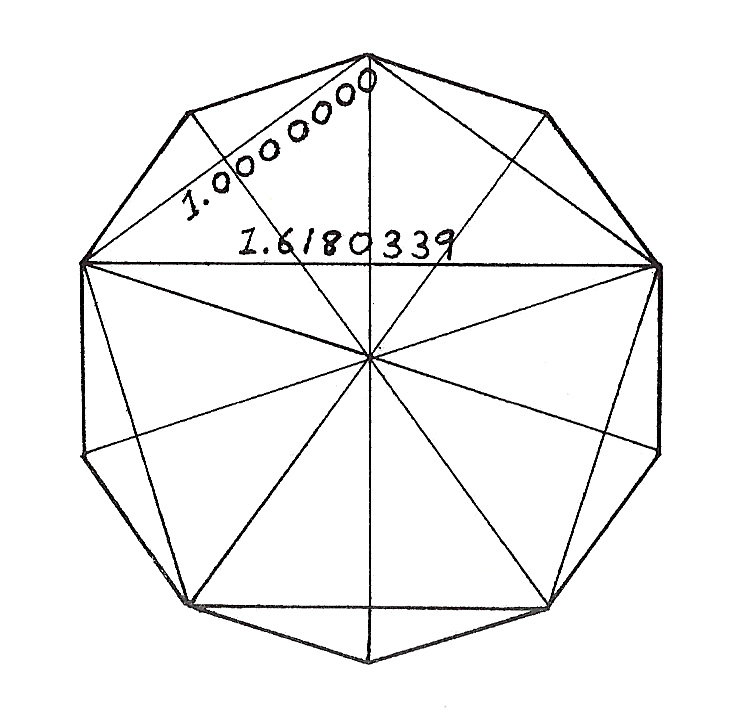
3 THE DIVINE PROPORTION, or 1.6180339… is the relationship between the diagonal of a pentagon to the edge. This accounts for its ubiquitous appearance in our structures with five-fold symmetry, for these structures are continuously forming pentagons. Again and again components can be found as diagonals or sides of pentagons made with other components—or both. But this isn’t really reason enough. It is hard to think of any of the numerous divine proportion relationships as cause for others. Rather, they all seem symptoms of a deeper set of relationships. And our fastening on the divine proportion and the Fibonacci numbers1 seems peculiar when we consider, for instance that the square root of 2 appears again and again in grids of squares.
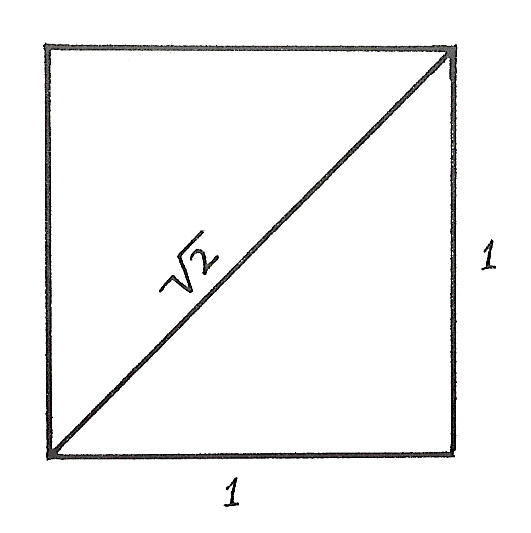
6 And that the square root of 2, an irrational number, is approached by a simple sequence of fractions.
| (11.1) |
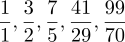
8 Each denominator is the sum of the numerator and the denominator of the preceding fraction. Each numerator is the sum of its own denominator and the preceding one. Or, if one uses a pattern of seven lines, there are still other relationships and their powers that appear and reappear.
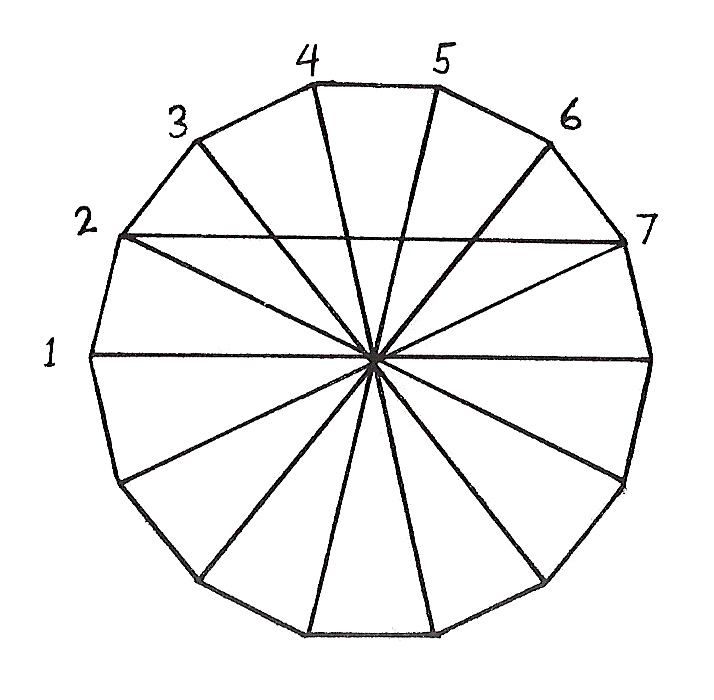
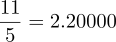
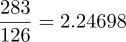
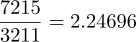
10 In the 7-zone star the relationship between the lengths of the radii and the line 45 can be approached by the relationship between successive integers in a sequence formed in much the same way as the divine proportion’s Fibonacci series. The rule for forming the sequence is that in the sequence any integers Sn:
| (11.2) |

12 or, for example,
| (11.3) |

14 The first terms in the sequence are…1, 2, 5, 11, 25, 56, 126, 283, 636, 1429, 3211, 7215, 16212, 36428, 81853
| (11.4) |
| (11.5) |
| (11.6) |
| (11.7) |
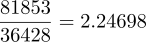
19 Calculating the value from 10 place trigonometry tables
| (11.8) |
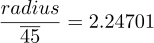
21 The relationship between the radius and the line 27 is approached by the ratio between adjacent terms in a sequence where:
| (11.9) |

23 The more you examine properties of objects and phenomena, the more you find yourself presented with a few terms, usually simple, from a long series of terms. Often you cannot touch the terms which are farther or lower in the series, but you can define properties which they have. One gets the feeling of living in a container - one of an infinite number - to which are shunted objects and phenomena which have passed through one filter but can’t pass through another; a great process like that which takes place in a gravel yard, only we are unable to see gravel other than that of our own size but sense that it exists in endless different piles beyond - everything from sand to piles of planet sized boulders.
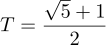
24 T expressed as a continued fraction.
| (11.10) |
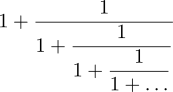
26 We can truncate the fraction anywhere and compute its value. The farther we carry it the closer it approximates the exact value;
| (11.11) |
11.1 Tau Power Series
| T−3 | = | 0.2360680 |
| T−2 | = | 0.3819660 |
| T−1 | = | 0.6180340 |
| T0 | = | 1.0000000 |
| T1 | = | 1.6180340 |
| T2 | = | 2.6180340 |
| T3 | = | 4.2360680 |
| T4 | = | 6.8541020 |
| T5 | = | 11.0901699 |
| T6 | = | 17.9442719 |
| T7 | = | 29.0344418 |
| (11.12) |

11.2 Pattern and Rules
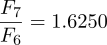
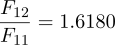
30If you begin with any two numbers and follow the rule, each term equals the sum of the two preceding terms, the ratio between consecutive terms approaches the divine proportion.
31 The first two terms of the Fibonacci numbers are 1, 1, and their proportion  is a long way
from T, but
is a long way
from T, but  quickly approaches T.
| (11.13) |
| (11.14) |
34 Accompanying many simple polygons and patterns of polygons are series such as the Fibonacci, where the relationships between different terms approach the precise geometric relationships. The rules for forming the accompanying series are then clues for examining the structure of the pattern. And the relationships repeated in the pattern are clues for rules which give the process to form the pattern.
35 The perfection of the geometric form seems fragile. If we demand perfection to 7 decimal places, the thickness of a line spoils our form.
36 But the rules for the formation of the series which accompany the pattern are sturdy and simple. If mistakes are made in a sequence formed by the rules, the sequence heals itself after a few generations to again approach the precise form. This is seen in how quickly the Fibonacci series approaches T after its clumsy beginning.
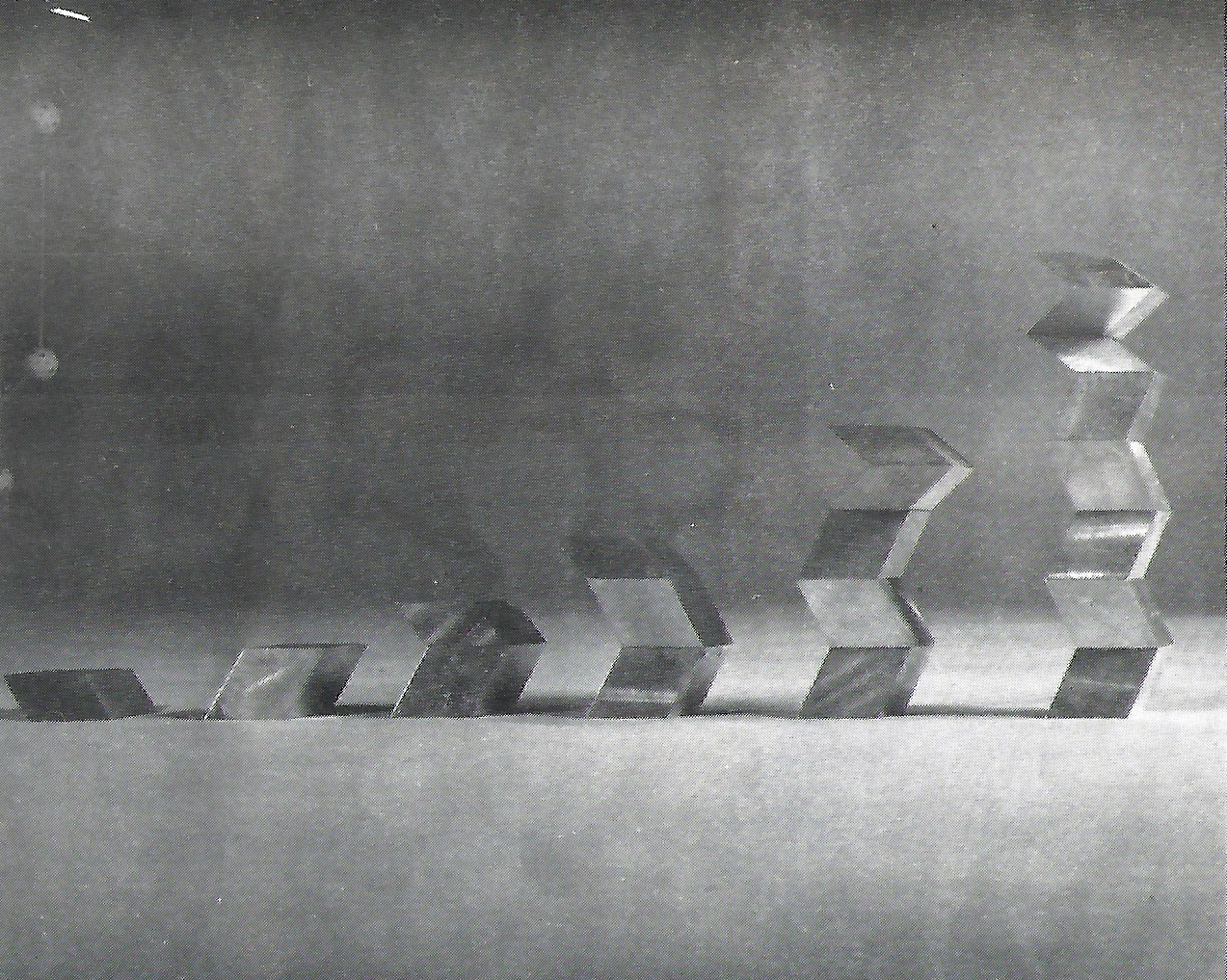
38 Stacks of six zone acute and obtuse cells. The widths of an acute cell and an obtuse cell are in the divine proportion. Therefore, a series of stacks can be built with each stack 1.6180339… times as tall as the one before it. The rule is that each stack is made by placing the two stacks that precede it on top of each other.
39 There are also numerous relationships involving the divine proportion among the altitudes of the parallelepiped cells formed with ”B” lines.
11.3 The Fibonacci Numbers
| F1 | 1 | F11 | 89 | F21 | 10946 | F31 | 1346269 |
| F2 | 1 | F12 | 144 | F22 | 17711 | F32 | 2178309 |
| F3 | 2 | F13 | 233 | F23 | 28657 | F33 | 3524578 |
| F4 | 3 | F14 | 377 | F24 | 46368 | F34 | 5702887 |
| F5 | 5 | F15 | 610 | F25 | 75025 | F35 | 9227465 |
| F6 | 8 | F16 | 987 | F26 | 121393 | F36 | 14930352 |
| F7 | 13 | F17 | 1597 | F27 | 196418 | F37 | 24157817 |
| F8 | 21 | F18 | 2584 | F28 | 317811 | F38 | 39088169 |
| F9 | 34 | F19 | 4181 | F29 | 514229 | F39 | 63245986 |
| F10 | 55 | F20 | 6765 | F30 | 832040 | F40 | 102334155 |
| (11.15) |
