2 The Music of the New Life
6 I have pondered a great deal on the word ‘‘creativity,’’ and I’m not inclined to use it in respect
to human beings, because my own feeling as an explorer in events, behaviors, mathematics, and
physical phenomena in general is that what is usually spoken of as creativity is really a unique
and unprecedented combination in the use of principles discovered by man as existing—a
priori—in the universe. I think the word ‘‘creation’’ implies adding something to the universe. And
I don’t think man adds to the universe. I think man is a very extraordinary part of the
universe for he demonstrates the unique capability to discover and intellectually identify
abstract, operative principles of the universe—which though unconsciously employed have
not been differentiated, isolated, and understood before, as being principles, by other
biological species. Rejecting the word ‘‘creativity’’ for use by any other than the great
intellectual integrity progressively disclosed as conceiving both comprehensively and
anticipatorily the complex interpatternings of reciprocal and transformative freedoms which
apparently govern the universe I go along with the 5,000-year-old philosophy of the
Bhagavad-Gita Change: Add to bibliography which says, ‘‘Action is the
product of the qualities inherent in nature. It is only the ignorant man who, misled by
personal egotism, says: ‘I am the doer.’ ’’ I am most impressed with the earliest recorded
philosophic statements by unknown individuals of India and China. These earliest
philosophies became progressively compromised and complicated throughout ensuing
millenniums.
Change: Add to bibliography which says, ‘‘Action is the
product of the qualities inherent in nature. It is only the ignorant man who, misled by
personal egotism, says: ‘I am the doer.’ ’’ I am most impressed with the earliest recorded
philosophic statements by unknown individuals of India and China. These earliest
philosophies became progressively compromised and complicated throughout ensuing
millenniums.
7 Machines have given rise to apprehension in people throughout the world—an apprehension shared by many within the field of music. With respect to machines I feel it important to recognize that we, ourselves, physically speaking, are machines. All of our musical instruments are machines. The physical universe is a machine—in fact, universe is the minimum and only perpetual motion machine. What people are usually apprehensive about is the unfamiliar machine. … Yesterday’s horses were frightened by automobiles. When humans see an unfamiliar black box, batteries, and a red button with wires leading under their house, they are justifiably apprehensive. I think man is very properly concerned about that which he does not understand. I don’t think that it is the machine per se that bothers man; it is just not understanding—anything—whatever it may be—that disturbs him. When an accident bares portions of human organs—familiar only to doctors—those organs look foreign and frightening to people. Stick your tongue way out before a mirror. It is a strange device.
8 At the outset of the industrial era it was often said that everything would soon be stereotyped; that variety in life would diminish. In the era of man’s accomplished flight, the acceleration in design diversity of flying machines has outstripped all living species evolution in rate of increase of novel forms most of which have been magnificently reinspiring of man’s imagination. Except for paint and interior passenger craft decor the design-science evolution of aircraft has been entirely functional and devoid of esthetical motivation yet inadvertently powerful in esthetical effects induced in the functionally illiterate public. The electronics revolution has been prosaic and severely mechanistic, but it has brought all the music of all history to all people everywhere.
9 As an explorer in what we call generalized comprehensive, anticipatory design-science principles, one could question my professional warrant to delve into the world of music. I would like to justify my position. The word ‘‘generalization’’ as used in the literary sense means ‘‘very broad .’’ It suggests trying to cover too much territory—too thinly—to be useful. The literary men say ‘‘this is too general.’’ In the mathematical sense, however, the meaning of generalization is quite different. The mathematician or the physicist looks for principles which are persistently operative in nature, which will hold true in every special case. If you can find principles that hold true in every case, then you have discovered what the scientist calls a ‘‘generalized principle.’’
10 The conscious detection of generalized principles which hold true under all conditions and their abstraction from any and all special case experiences of the principles may be unique to humans. By abstraction I mean an idealized, empty-set, first-degree generalized statement such as one of my own, ‘‘Let’s take a piece of rope and tense it.’’ This refers to any rope and is a first-degree generalization. Next I say, ‘‘Tension and compression are only coexistent’’—when you tense a rope its girth contracts—ergo compresses. This observation is a second-degree generalization. Another empty-set abstraction of my own is ‘‘convex and concave only coexist.’’ We cannot have the convex surface of the ping pong ball without the coexistence of the concave interior. You cannot have the convex surface of a pebble without the concave aspect of that surface as viewed from the center of the pebble with X-ray ‘‘sight.’’ The sum of the exterior angles of every system’s convexity is always the same as the sum of the interior angles of the system’s concavity. We also can say that the electromagnetic positive charges only coexist with negative charges. We can say that the three foregoing cases of only coexisting phenomenon tension and compression , convexity and concavity, and electromagnetic charges are each special cases of the generalized mathematical case of the only-coexistence of functions of a system. This last statement is a third-degree generalization which generalizes generalizations. Forty years ago I generalized this third-degree abstraction even further by saying that ‘‘unity is plural and at minimum two.’’ This is a fourth-degree generalization. Einstein’s ‘‘relativity’’ and the physicists’ ‘‘fundamental complementarity’’ of universe constitute fifth-degree generalizations, for they abstract, condense, and reduce the generalizations to single words.
11 There is further significance to this pattern of thought. The physiologist, Dr. Wilder Penfleld, head of McGill University’s Neurological Institute and leading electrode prober of the functioning of the brain, says, ‘‘It is easier to explain all the data—obtained from such probing—if we assume a phenomenon mind as well as the phenomenon brain, than it is to explain the data if we assume only brain .’’ In other words the probing has found the ‘‘telephone’’ connections of the brain and the system’s automatic message recording and information-storage equipment, but many of the conversations and initiation of the conversations that go over the system and get stored are not inherent feedback developments of the telephone system itself.
12 It is inconceivable that a dog tugging at his leash at one time and compressing his teeth into a bone at another time should formulate consciously the generalized ‘‘only coexistence of tension and compression’’ and coexistence of concavity and convexity of his teeth though the dog is spontaneously and subconsciously deft in tension- compression tactical moves. I am confident that the difference between animal brains and the human mind lies specifically in man’s unique ability to generalize to progressively compounding degrees of abstraction. I think that this is man’s unique function in universe—antientropy. The physical universe is entropic; that is, energies escape from local systems and the ‘‘fallout’’ is described as the Law of Increase of the Random Element, and that increase of diffuse energies brings about the expanding physical universe; in superb balance with which the human mind continually probes for and discovers the order in universe and continually contracts the descriptions of the separate orderly behaviors discovered in nature and combines the generalized observations in progressively comprehensive generalizations whereby the metaphysical universe cofunctions equally with the physical universe as its contracting-universe and increasing-orderliness counterpart. Man is the great antientropy of universe. The famous ‘‘Second Law’’ of Thermodynamics propounds entropy. But the human mind discovered and described and harnessed in orderly fashion this disorderly propensity of nature. Einstein’s mind discovered and generalized the comprehensive law of physical energy universe as E = Mc2 and the process of metaphysical mastery of the physical is irreversible. It is unthinkable and nonexperienced that energy can and does pronounce what intellect is.
13 I am certain that what we speak of as human morality is a form of intuitive and tentative generalization of experiences not as yet worked out in mathematical degree of incisiveness. Man has also the unique ability to objectively employ generalized principles —once recognized—in a consciously selective variety of special-case interrelationships. He is thus able to alter the inanimate environment and thereby to alter the ‘‘specialized-case’’ patterning of human experiences and thereby to provide more opportunity to verify or discard previous generalizations and to formulate new ones.
14 I am quite confident that many generalized principles also have their special-case realizations in the world of music. Pythagoras’ discovery of the law of octaves obtained by halving tensed strings and of major and minor mode key progressions of fifth notes, obtained by trisectional fret- stops applied to firmly tensed strings or dried gut sinews, was an extraordinary instance of objective generalization which is also called ‘‘invention.’’ I have discovered generalizations operative in other special case areas than that of music which may have special-case occurrence in music. It is my familiarity with generalized principles—that must per se permeate music as well as other areas—that permits me as a generalist to speak to you as musical education specialists.
15 Musicians in contrast to the scientists are extraordinarily intimate with their own theory. I’m going to make clear what I mean by that by talking about some scientists. The Massachusetts Institute of Technology’s Faculty Club has quarterly speakers. I was their winter-quarter speaker of 1950. I stood up—and because I hadn’t prepared anything—found myself thinking out loud—something that surprised me very much. I said that I was surprised to be invited to speak to them because they were all so ignorant. They looked astonished, and I was a little astonished myself. So I had to explain why I thought they were ignorant. And I said that all of them as scientists, on leaving M.I.T., went home to their families, and on a beautiful summer afternoon or early evening, at a picnic, said to their wives, or daughters, or sweethearts, ‘‘Darling, look at that beautiful sunset .’’ And all the scientists realistically saw and as yet ‘‘see’’ the sun setting—‘‘going down.’’
16 I wouldn’t think much about this ‘‘seeing’’ of the sun ‘‘setting’’ by a taxi driver or other layman, but, I said, ‘‘As scientists, you have had 500 years since Copernicus and Galileo to get your senses in gear with your own experimentally-proven information. You know that the sun is not setting. You know that the earth is revolving to obscure the sun, but you see the sun set. Because it is taking you more than 500 years to get mentally—reflexively—in gear with your own theory, it must be because you don’t know how and probably haven’t even tried; therefore I think that you are fundamentally ignorant, particularly because of experiments I have made with children.’’ I’ve used a free Earth globe and a small spotlight fixed on a stand ten feet away in a dark room. The spotlight represents the sun. One side of the Earth globe is lit—the other is in shadow. Having first identified the picture of the continents on the globe and ‘‘where we are now’’ I’ve gone on to explain to very young children who haven’t been given the word ‘‘sunset’’ too often that the earth is revolving to obscure the sun. I glue the soles of the feet of little paper cutout figures of the children to the part of the world globe where ‘‘we are standing’’ and revolve the globe eastwardly. The children’s paper figures are revolved out of the ‘‘sun’’ light, with increasingly long shadows until they are in the deep night—as the globe goes through night to return the children into morning as the long shadows shrink, and finally they come once more into the minimum shadow of noon.
17 I then take the children onto a high point of land, with wide horizons at dusk. I have them face north with their feet wide apart and I ask them to consider our enormous sphere revolving as they watch the sun out of the corner of their left eye and they say they ‘‘feel’’ the great Earth ball rotating them around out of line of sight with the sun.
18 Driving due west on a superhighway at 70 m.p.h. in late afternoon with the sun in our eyes we explain to the children that the earth’s surface—like a phonograph record’s outer rim—revolves faster at the equator than near the poles and that at mid-U.S.A. the surface is revolving eastward, away from the sun, at 860 m.p.h., which means that we are running a losing race to keep the sun in sight and the children excitedly see, and so do you, the extraordinary speed of eastward revolution of the earth speeding by the car as we get swept back eastward at 790 m.p .h. despite our 70 m.p.h. westward rate. Thenceforward the children ‘‘see’’ the true Earth-Sun relationship realistically. That is reflex conditioning. There is often an additional special blockage that hinders grown people regarding sun relationships, which is the poetical sound of ‘‘sunset.’’ No one has invented a more poetical single word to express being revolved out of sight of the sun. Which way we see often depends on what we are told at the outset of life before we unconsciously, or subconsciously lock together our spontaneous brain reflexings.
19 I found it possible at 40 years of age to correct my erroneous sunset reflexes. It took much time, however. Therefore I know that we can say that it is not impossible to recondition our adult reflexes, but the later, the more difficult. I find that the scientists are experimentally remiss in continuing to yield to feelings that do not agree with their theories. They have failed, because of ignorance, or laziness, or fear of being ‘‘different,’’ to bring whatever they have learned of the universe into correct conceptual realizations by the child. They haven’t taken the trouble to test the theory they have acquired, so they carelessly continue to misinform the children. They are apparently ignorant of the fact that the child can most easily learn to see things correctly only if he is spoken to intelligently right from the beginning. Intelligently means thinking such situations through to discover the need for experimental preciseness plus the disciplining of self so to do. I think it is unscientific of the scientists in the educational processes to let these matters ride, and to go on debilitating whole new generations one after the other of billions of young who if geared sensorially with correct theory might have effective common sense enough to make the world work.
20 I note that scientists also use the words ‘‘up’’ and ‘‘down’’ hundreds of times daily. So I asked the M.I.T. faculty if any of them could tell me what part of the universe is ‘‘up.’’ Are the people in China upside down? Those deeply in-conditioned words ‘‘up’’ and ‘‘down’’ are derived from the millenniums in which man thought erroneously of his universe as an horizontal island as—‘‘the four corners of the Earth’’—and as the ‘‘wide, wide world’’—in an infinitely extending horizontal ocean with an obvious ‘‘up’’ and ‘‘down’’ set of parallel perpendiculars to his flat plane—heaven up and hell down. Whatever other dimensional relationship could there be to an infinitely extended ‘‘flat’’ plane? Though as yet difficult to purge from yesterday’s reflex-conditioned flat-earth concepts and speech, to man far out in universe the sphericity of Earth becomes evident and ‘‘up’’ and ‘‘down’’ soon become obviously, feelably meaningless. But clipper-ship captains of the last century sailing their ships around the world and the aviators flying planes around to China in this century discovered that they didn’t have to turn their ships upside down when they reached China. Aviators have discarded the words ‘‘up’’ and ‘‘down.’’ Now they come ‘‘in’’ for landings and they go ‘‘out.’’ Astronauts come ‘‘in’’ with respect to various specific bodies in the universe and they go ‘‘out’’ from them. ‘‘In’’ is individually unique as a direction toward the center of any one system—but ‘‘out’’ is common to them all. There is no shape of space—there is only omnidirectional nonconceptual ‘‘out’’ and the specifically directioned conceptual ‘‘ins.’’ ‘‘Space’’ has no identifiable meaning. The atmosphere’s molecules over any place on earth’s surface are forever shifting position. The air over the Himalayas is enveloping California a week later. The stars overhead now are underfoot twelve hours later. The stars themselves are swiftly moving in respect to one another. Many of them have not been where you see them for millions of years; many burnt out long ago. The sun’s light takes eight minutes to reach us. When you see the sun tangent to the western horizon you are seeing around the horizon. And the light of the brightest star in the heaven takes 4 1/4 million years to get to us and that star probably burnt out a million years ago. ‘‘Space’’ is meaningless. We have relationships—but not space.
21 As there is no meaning to the words ‘‘up’’ and ‘‘down’’ I said to the M.I.T. faculty, ‘‘I think that you scientists are again demonstrating ignorance in not being able to purge your own language of scientifically faulty words and concepts.’’ When the Jet Propulsion Laboratory’s scientists of California reported to the world over radio and television the first successful United States rocket-launched satellite’s accomplishment of orbit, they constantly used ‘‘up’’ to describe its outbound flight. As the Gemini astronauts orbited over China the scientist on the ground speaking to them from Texas was heard to say,‘‘Well, how are things up there today, boys?’’ As he spoke the ‘‘boys’’ were in the direction of the scientist’s feet.
22 I went on to say to the M.I.T. faculty: ‘‘As scientists, you tell me that the wind is blowing from the northwest, which infers that you can really blow air great distances and that there is some place called northwest—which, of course, there isn’t.’’ Air can’t be blown great distances. It curves back upon itself in evoluting-involuting doughnut shaped ring clouds—from the tobacco smoke-ring size to the atomic bomb’s mushroom-ring size. An electric fan at the front door cannot push air through all the rooms of the house , but it can pull air through all the windows and through the rooms around corners and out through the front door. Whereas pushed air cannot travel great distances, pulled air tries to straighten out and can be pulled over enormous distances. What the scientists really mean when they said it is blowing from the northwest is that there is a low pressure to the southeast of us which is sucking the air from all directions and pulling it by us—as we happen to be situated on Earth northwestward of the low-pressure center. So why don’t the scientists say ‘‘a low pressure southeast of us is sucking.’’ Or simpler yet ‘‘southeast’s sucking.’’
23 At any rate, I was able to get the M.I.T. scientists to laugh at themselves, realizing that they were indeed quite reflexedly ‘‘ignorant.’’ They are as yet ignorant because they have not learned by experimentally proven means how to gear many of their theories in with their senses. How can they make sense if their senses deny their theory? They try to find excuse by saying that science now deals primarily with subvisible, subaudible, subsmellable, and subtouchable phenomena. We answer that through generalized principles, which being abstract are independent of size, it is possible to make special-case models at sensorial sizes of all the phenomena. The fact is that scientists, like aviators flying in fog at night, went ‘‘on instruments’’ in the mid-19th century. There is a greater gap between the scientist as a scientist and the same scientist as a human being than the gap between the scientists and the non-science-educated members of the human family. In contradistinction to the esteem in which world society holds them, scientists are the most confused and irresponsible human beings now alive. They lay ‘‘eggs’’—and the businessman sells the eggs to the politicians and the politicians ‘‘scramble’’ or ‘‘drop’’ or ‘‘easyover’’ those eggs as we hurtle toward oblivion. If our lives are left to their care we will all soon be dead.
24 Now I’d say that my feeling about musicians is that they do gear their senses realistically with their theory. And I have a feeling that in music, man may be able to deal with the new life much more effectively than science has been dealing with the newborn life. All phenomena are generalizable into frequency language, and music provides sensorial-range frequency and amplitude modulating. As this meeting is being indirectly aided by the National Science Foundation’s educational effort, in view of my foregoing statements, I think that it is important for us to look a bit at the great attempt of science to enormously expand its capabilities through organized educational activity.
25 Fifteen years ago, our country had great need to discover how to produce scientists. Sputnik, only seven years ago, accelerated the effort to solve the abundance-of-scientists problem. In order to know how to produce scientists the Academy of Sciences and the National Science Foundation said, ‘‘Let’s look at the record. How have we produced scientists?’’ There is in Washington, D.C., a roster of all the scientific societies in the United States and of all the members of those societies. The vital data on all the different scientists in the United States is filed in Washington on punch cards which contain extraordinary ramifications of information concerning the lives and the educational preparations of those individual professional scientists. From this data it was possible to get answers as to the development of the front-rank American scientists.
26 The committee of scientists working on this question first established their criteria of what in their estimation constituted a front-rank scientist. They said he must have a Ph.D. He had to have made highly accredited original contributions to knowledge. He must have published his work in copious manner. Having set up the criteria, they were then able to ask the punch card, data-storage system to come up with the names of all the scientists in the United States who qualified under their ‘‘front-rank-scientist’’ criteria. Up came a set of cards with actual names and case histories of the individuals.
27 Possibly the most startling news for those who read this data was the fact that the top scientists of the United State had not been educated in scientific establishments. The Massachusetts Institute of Technology and the California Institute of Technology were not among the first 20 of the educational institutions from which the best scientists had come. It was found that front-rank scientists had come predominantly from small liberal-arts colleges. The committee went on to query the scientists individually on the prime factors to which they themselves attributed their successful development. This inquiry brought out that the majority of ‘‘front-rankers’’ felt that the most important factor in their lives was that they had been students of a great and inspiring teacher. Front-rank scientists’ success was clearly attributable to small colleges and intimate, personal-equation factors of an inspiring teacher. The key was individualism at its intellectual best. Russians please take note!
28 In regard to the subject of our meeting itself, the new technology and its aid to the educational processes—in (the special case of) the field of music, I think it’s very important for us to recognize right away that if a great teacher is of the essence, then it is also very much in evidence that great personalities can come over television and moving-picture documentaries. Children and young people by the multimillions fall in love with moving-picture actors and actresses. Their personality comes through despite their having been seen only as a complex of flickering light and shadows on a blank wall. It is quite clear that personality can ‘‘come through’’ the machine. Listen to and look at Pablo Casals playing in Robert Snyder’s documentary of Casals during his now discontinued self-exile in Prades, France. Inasmuch as the great teacher personality is one of the great factors of education success, I would say that we are not faced with insurmountable trouble by the machines—quite the contrary. We can attain greater intimacy with the nuances of facial expressions and bodily motions of great personalities with the blown-up screen projections than can be experienced by students in back rows of concert and lecture halls. I think it obvious that we can bring great personalities—who could not possibly meet face-to-face with millions of students seated in stiff chairs in crowded classrooms—to hundreds of millions of young people listening and viewing undistractedly in their homes, by use of well-developed TV documentaries. Have we not been bringing Bach to billions of people by radio? Who can say ‘‘Bach is dead’’? Children sitting comfortably at home seem annoyingly undisciplined to the busybodies of yesteryear, who want each generation to have to take what they themselves took. But discipline is exclusively from within the self and most effective when spontaneously initiated. I have photographed the eyes of my grandchildren—all unnoticed by them as they were fixed upon the TV. They were obviously in the same utter preoccupation as that of a baby at its mother’s teat. TV antennae bristle from the rooftops of every one of the world’s worst slums. The pipelines for great teachers to reach the eager brains of the otherwise underprivileged billions already exist.
29 At this point I would like to comment further about gearing scientific theory and sensorial reality. By such mental skirmishing I am going to work toward generalizations of the various principles that I think may interest you in relation to problems of music teaching.
30 Not only do I find that the scientists at M.I.T.—and everywhere else around the world—are out of gear with their own theory (as once was I—to far worse degree), but I find also by actual experience, that many if not most of the axioms of our would-be simplest geometry and arithmetic are faulty. Axioms are defined by Webster as ‘‘statements which need no proof because their truth is obvious.’’ Because they take axioms erroneously as obvious (as with the sun ‘‘setting’’), ‘‘pure ’’ mathematicians deliberately sidestep the experimentally developed basis of all physical science. Much of the mathematics deal with phenomena which could hold true only if their axioms are proven experimentally valid. Because experiment invalidates most of the axioms of mathematics such as the existence of solids, continuous surfaces, straight lines, etc ., much of the mathematical curriculum sanctioned by mathematical educators, adopted by school boards, and taught in all elementary schools is false, irrelevant, discouraging, and debilitating to the children’s brain functioning. Science is culpable for allowing this debilitating practice to go on. Sense-illiterate scientists haven’t taken the trouble to find out how to stop each generation from relaying to the next one disciplines that are misleading and frustrating.
31 Obviously one of the reasons why scientific education has seemed too difficult for many is the fact that much of its mathematics is founded upon experimentally unprovable myths which must greatly offend the intuitive sensitivity of the lucidly thinking new life. I find it shocking that I can recite to you many mathematical fallacies that we may be fated to go on teaching for another decade thus to ruin the extraordinary learning potential of another whole generation. All of this mischief of irresponsibility of the so-called grownups will have to be undone, probably at painful cost to world society, quite possibly at total cost. We don’t have much time to couple both our theories and our senses with mathematical and physical reality, thereby to gain universally spontaneous cooperation in tuning man’s competence first to save himself and then to make him a success in universe.
32 What should have been a socially shocking statement—but wasn’t (in fact went socially
unnoticed)—had to be made during World War II, by some of the few great scientists. These
scientist said in the early 1940s that when a young man demonstrated extraordinary capability in
the sciences, at the university graduate student level, and it was thought that he might be
developed further to become a great scientist, it meant that eventually he had to be assigned to
work with an already demonstrated great scientist, and the time of that very great scientist was
of such extraordinary value that the great one must not be impeded by a young man who was
not going to be worth the risk of wasting the proven great one’s time. The greatest test that the
senior scientists had to apply to the promising bright ones was the one which would
discover whether the candidate had the intellectual fortitude to withstand unlearning
everything he had learned, because that was what he was going to have to do in order to
become an importantly effective modern scientist. This was occasioned by the proven
greats’ discovering that approximately everything that science had thought to be validly
operative, up to 1932, was discovered to be no longer valid. Science had to start all
over again. (See the 1942 farewell address of the outgoing president of the American
Association for the Advancement of Science.)  Change: Add
reference
Change: Add
reference
33 Since 1932 mathematical physicists, physicists, chemists and many other scientists have been through one housecleaning after another. In contradistinction, so-called ‘‘pure’’ mathematics and all of the branches of the ‘‘pure’’ variety that permeate academic disciplining, on the pretext that it is pure —ergo transcendental to applied or experimental reality—has failed to purge itself of its unproven axiomatic conceptions, adopted almost entirely in the millenniums before present experimental science began to alter man’s comprehensive ecology and cognitive capabilities.
34 The axioms, which started with the ‘‘obvious’’—the superficially deceptive appearance of ‘‘nature’’ in the premicroscope or pretelescope era of extension of man’s sight—induced a prodigious and now invalid vocabulary that has never been subjected to rigorously conducted scientific experiment.
35 Despite that the vast majority of pure mathematicians will disagree with me violently and may call me unbecoming names for so stating, I dare to suggest to you that ( excepting completely the mathematical physicists) the revolution about to take place in mathematics education will be amongst history’s most violent academic reforms. You will not have long to wait to discover that I am right—and I am not referring to what is called the ‘‘new mathematics.’’
36 Pride, fear, economic and social insecurity, and the general inability of humanity to let go of nonsense in order vastly to reorganize ourselves is of the essence. Therefore, I would say, speaking of educational tools and instruments, that the tools are going to make it easier for the new life to discover experimentally what really is going on in nature so that the young will not have to go on taking so much nonsense on experimentally unverified axiomatic faith. The revolution will come when the tools, such as the computers, disclose the nonsense and axiomatic invalidities to the rising generation.
37 Now, I’d like to mention an individual and his experimental work that has been recently and deservedly much discussed. I speak of Dr. Benjamin Bloom and his book on Stability and change in human characteristics —John Wiley & Sons, publishers. His book reviews effectively a number of case histories of individuals from birth up to the university graduate-student years, approximately the first 26 years of life. The studies have been made in relation to periodically and uniformly administered IQ tests. I am going to talk about these case histories of Dr. Bloom’s in the light of other scientific explorations, for instance the explorations that are being made by the neurophysiologists, exploring the human brain with electrodes and thus discovering many important electrical wave patterns.
38 Gradually a number of patterns in the brain have been positionally identified with respect to specific cell groups, as related also to specific types of thought, expressions, and actions of individuals. Through this physiological exploration a great deal is now known of the patterning of brain events and functions. Apparently we start life with a given total brain-cell capacity, component areas of which are progressively employed in a series of events which are initiated entirely in the brain of the individual by preset chromosomic ‘‘alarm clocks.’’ Put your finger in the palm of a newborn baby’s hand and the baby will close its tiny hand deftly around your finger. If you try to withdraw your finger, the baby’s hand responds instantly to the withdrawal tension which you exert and it opens its hand. Its tactile apprehending organism is apparently operative in superb coordination at birth. Days later the ‘‘alarm clock’’ calls the hearing function into operation. Days later the babies ‘‘see’’ for the first time. One by one the brain’s alarm clocks and the chromosome ‘‘ticker-tape’’ instructions inaugurate use of the child’s vast inventory of intercoordinate capabilities and faculties. The child is not in fact taught and cannot be taught by others to inaugurate any of these capabilities. He teaches himself—if given the chance—at the right time.
39 Parents, as you know, have for eons thought that they were going to have to teach their children how to develop, function by function—to walk and to talk—but gradually it has been discovered that was not the case.
40 Now, we are entering a much more up-to-date phase of humanity on earth. We’re beginning to learn a little bit experimentally about the child’s extraordinary capabilities. What you can get from Dr. Bloom and the neurologists is the information that the set of ‘‘alarm clocks’’ that go off by the time a child is four years old govern 50% of the total capacity of the child to improve its IQ at any later date. If not properly attended to and given the chance to function, despite the brain’s alarm-clock inauguration of progressive capabilities in those first four years, the brain mechanisms can be frustrated and can shut off the valves of those specific capacities and capabilities to learn, then or later on, in the specific areas. The capabilities need not necessarily be employed to important degree immediately after inception, but must upon inception be put in use and kept in use as active tools in the human coordinating capability else they will squelch themselves; that is, ‘‘shut themselves off,’’ not necessarily irreparably, but usually so.
41 The next 30% of the total capacity of children to learn has been put into action by the time they are eight. Thus 80% of the total capability to self-improve IQ capability thereafter has been put in operation by eight. By age thirteen, 92% of the total capability has been self-started into usability. Between the years thirteen and seventeen the final 8% of the total capacity to coordinate and apprehend, to comprehend and teleologically employ the input data, has been brought into operation. From seventeen on, the most the young people can possibly do is to conserve the 100% capacity to further improve their IQ. We’ll take those figures and plot a curve of the rate of inauguration of the capacity to learn, starting the curve at zero years and plotting 50% of the capacity by four, another 30% by eight; another 12% by thirteen, and the final 8% by seventeen. Next we plot the curve of state and federal funds in aid of education as applied at those same age levels. We find that somewhere around three billion federal and state dollars a year are applied to the ‘‘higher education’’ period from seventeen years onward, while approximately no government dollars are applied to help the birth-to-eight-years period when 80% of the critical educational capacity is being established, which if not properly set in use and kept in use will be closed off. The great bulk of government educational funds is being applied ‘‘after the horse has fled the barn.’’ There was a little cartoon received with the papers about our Conference—a picture of the teacher, and a problem of multiplication chalked in white on the blackboard; along came the supervisor and gave the teacher a machine, an audiovisual aid, which projected the same multiplication problem in black figures upon a white screen—a new tool but no difference in technique.
42 I have what ought to be a surprising, even startling thing to say, which is that inasmuch as the period of greatest educational capability development is before four years old, the home is the primary schoolhouse—and kindergarten is the high school. Dr. Bloom makes this clear.
43 Given an adequate set of variable factors characterizing the environmental conditions experienced by a human individual from birth to seventeen years, Dr. Bloom can tell you within 1% what the individual’s IQ will be at seventeen years of age.
44 Human babies are born helpless, and stay helpless longer than the babies of any other biological species. If, up to four years old, that young life has experiences leading to its mistrust of the competence and spontaneous inclination of the older life to look out for it, there is a breach of basic trust: its parents have a certified school dropout on their hands.
45 Nothing that I say is meant to tell you that the individuals whose spontaneous employment of their innate capabilities has been curtailed or abandoned, due to childhood frustrations, cannot later on ‘‘find’’ themselves. Determined and reinspired individuals have occasionally found ways of reopening their abandoned cortexial faculties.
46 Besides trust, there are two other conditions of critically controlling importance during the first four years: (a) autonomy and (b) initiative. The new life has to have an area that is really its own. All life tends to guard its minimum regenerative territory. This is apparently a basic ecological requirement of all living species. The child needs a minimum ‘‘territory’’ that is its own—its own room if possible—at least its own bed. This is its autonomy.
47 The third prime factor affecting the one-to-four-year-old is initiative, which must not be frustrated when it starts making experiments. The child may want to experiment with gravity and inertia by just knocking things off tables—this gives him basic information. He must be able to make many such experiments in order to learn about the way the universe works. The child must have experiences which indicate the coherence of materials and things. What can he trust when he has to grab something to stop his fall? To find out he needs to tear many things apart. Newspapers need only be torn a few times to show that newspapers give poor tensional support. Looking for adequate tensional coherence, the child will soon want to pull good vellums or silks apart. Children mustn’t be stopped thoughtlessly as they go through their basic explorations , by virtue of which in due course they are going to start putting things together. They must take everything apart first and then learn how to put things together. Thus they learn to coordinate spontaneously. If parents break up that exploratory initiative by too many ‘‘don’ts’’ or punishments, or by having things in the child’s environment that are dangerous and by which the child gets hurt so frequently as to discourage its further exploratory initiative, then that child will probably be an early school ‘‘dropout.’’
48 In the four-to-eight-years period of child development, something comes in that is in a sense close to music which governs the ability to improve IQ during those four critical years. The most important factor is the speech pattern of the parents. If the parents take the trouble to speak clearly, to use their language effectively, to look for the better words, the children are inspired to do likewise. If the parents’ tones of voice are hopeful, thoughtful, tolerant, harmonious, again the children are inspired to think and speak likewise. If the parents are not parroting somebody else, but are quite clearly trying to think and are trying to express themselves, nothing encourages more the intuitions of the young life to commit itself not only to further exploration but to deal competently in coordinating its innate faculties. However, if the parents indicate that they are not really trying, or worse, relapse into slang clichés, slurred mouthings, blasphemy, anger, fear, intolerance indicating an inferiority complex which assumes an inability of self to attain understanding by others, then the four-to-eight-year-older becomes discouraged about his own capability to understand or to be understood. If the proper books are on the family shelves, if there are things around the house that make it clear to the child that the parents are really trying to educate themselves, then the children’s confidence in family is excited and the children too try to engender the parents’ confidence in their—the children’s—capabilities.
49 We witness then that the children intuitively differentiate between parents who try to employ their minds and brains instead of relying only upon their muscles, cunning , or deception in the struggle to survive. The children who intuit that their parents have chosen to use mind over matter (of course unconsciously and without formulating such words) are inspired to employ their best innate faculties to highest effectiveness and most spontaneous coordination of the factors favorable to success.
50 I’ve just come from Caracas, Venezuela, a very beautiful city of two million inhabitants. We don’t have many cities in the United States of that size and none more beautiful. We have heard much about bombings and political troubles in Venezuela. The beauty of the scene at first belies the reputation. You also have heard much of the petroleum-generated wealth of Venezuela and its capital city Caracas. From the Caribbean port of Caracas you climb by automobile through tunnels in the mountains to enter a high and beautiful inland valley in which the city of Caracas is situated. The city runs about 15 miles along the 3,000-foot-altitude valley bottom between two winding mountain walls rising on either side another 3,000 feet above sea level. They are green-growth-covered mountain walls. There are no snow peaks on them. Clouds frequently hang lacily along the mountaintops. The clouds sprinkle frequently enough to maintain lush growth everywhere. A river bed winds through the valley intertwining with sculptured ribbons of expressways. Year-in, year-out, and the year-around, the temperature ranges only between 70 and 75 degrees Fahrenheit.
51 The Caracan rich have had enough money to build extraordinarily modern office buildings, apartment houses, hotels, universities, hospitals, and expensive residences. A few rich homes are on the hillsides.
52 In most cities, the slums run horizontally out behind, and are hidden by, the larger buildings. But with the opulent buildings of Caracas filling the entire valley floor, the only place left for the slum blight to spread was onto the rising slopes of its flanking mountains. In Caracas you can see the slums all along the hills. With the shacks constructed of the rubble and leftovers of yesterday’s changing materials the different slum areas draped over the lower mountainsides have the color effects of patchwork quilts. They make a deep impression. They disclose the large proportion of poverty as yet unbenefited by the energy wealth released by Venezuela’s petroleum. I was asked to meet with educators there in Caracas; much of my meeting was with the university students and those successful citizens who thoughtfully and wisely take responsibility for the general advancement of public education. First telling the Caracans of Dr. Bloom’s findings regarding environmental effects on IQ capabilities, I pointed out to them that the ‘‘real schoolhouses’’ are the homes in the slums right there on the hillsides. None of the slum shacks have running water. There are no sewer lines and no bathrooms or inside toilets. Getting sanitary waste disposal and bathrooms into those slums would up the IQ capabilities 50% in a short space of time. A bathroom isn’t just a piece of machinery. It is intimate to the fundamental routine of cleanliness, morality, and clean thinking. The ability to cope with filth-bred fungi and bacteria and their ravaging, through sanitary waste disposal and ready-to-hand soap and running water, has many subconsciously important relationships to the scheduled inaugurations of the progressive cerebral capabilities of the new life as disclosed by Dr. Bloom and his colleagues. Whether the older life really wants more life, and whether the environment manifests that the older life is going to try to make its arrangements to foster life more adequately deeply effects the ‘‘unfolding flowers’’ of the cortexial ‘‘gardens.’’ There are a million people sitting on those Caracas hillsides who are looking right at all that modern plumbing in the valley and the bombs of resentment explode first in their hearts over their incapability to adequately foster their children. Bombs going off in Venezuela are all to do with this. Of course illiterates are easy to incite to political revolution. But after the revolution there are no more sanitary facilities. So revolutions follow revolutions with never a sanitary gain.
53 Despite the poverty of those slums, they bristle with TV antennas. Secondhand TVs are connectable with civilization by wireless. Secondhand plumbing needs billion-dollar water- and sewer-line developments—and hillsides double the time and cost. In all the slums of the world, the TV antennas bristle. There is therefore a wireless hookup directly to the mothers and children who watch their televisions avidly. Whatever comes over the TV to the children and parents is the essence of education for better or worse. Television is the great educational medium. It is the number one potential emancipator from ignorance and economic disadvantage of the entire human family’s residual poverty-stricken 60%. I pointed out to the Caracans that their educational problems would not be solved in their universities but through sanitation in their slums and through educational TV advancements of high order.
54 The little red schoolhouse was a worthy conception of our forefathers. The older life always identified education with higher possibilities of economic and cultural success. Wanting their young life to have a better break of fortune than they—the parents—had experienced, they put their children on highest priority in the communal mandates upon their political leaders. Thus education has become the most obviously acceptable political objective. Politicians who set about to get high educational facilities for their constituents were most likely to succeed. Thus the educational system has become a political football. The enormous appropriations for education, however, go primarily into building programs—on a ‘‘millions’’ for buildings and a ‘‘thousands’’ for the teachers basis , approximately ten for the buildings and one for the teachers. In fact, education is a good way for politicians to keep the construction business going in bad times. So the construction business lobbies for education. The construction industry is the political payoff system of least visible corruption. The great Appalachian poverty program has turned out in the end to be only a road-contract bonanza for that branch of the construction industry. We don’t need more brick.
55 We don’t need more Georgian architecture symbols. We need more wholesomely attractive and efficient sanitary facilities and superbly conceived television educational documentaries. Early schools, with few to educate, had only one teacher. Teachers were scarce because even public literacy was minuscule. It seemed appropriate to bring all the children together in one place to hear that rare individual—a teacher. It was nice for the mother to be able to have the children out of the house for a little bit in order to have a chance to get the house clean. This did not mean that she did not love her children—but it was very nice to get them out for a while. There was therefore a babysitting function of the school. But mothers didn’t like to say that it was babysitting, because they didn’t want to seem to be getting something for nothing so they called it school. It also seemed desirable for the children to have social experience which the walk or ride to and from school and the children’s proximity—drilling and playing together —provided. However the least favorable environment for study is a schoolroom and closely placed desk prisons. Dr. Einstein did not sit in the middle of Grand Central Station in order best to study math and physics. He went into seclusion to study as does any logical human—in his private study or laboratory.
56 Let’s return to Bloom’s basic proclivities of the new life. The child wants his autonomy. The maturing student wants his privacy—his special place. We have learned by experimental work in education at Southern Illinois University of the IQ capability favoring that was attainable with a little individual, private room-booth with a windowed door which ‘‘belonged’’ to each student. When he first entered he found in his private ‘‘room’’ all kinds of desirable items. He had his own telephone directly and privately connected to his teacher. He found a good dictionary; wall charts of the periodic table of the elements; a world globe; a wall-mounted chart of the electromagnetic spectrum; his private typewriter, and other items conducive to thought and study. He did not feel inclined to go out of that room in order to find an environment more favorable to study. However he was not allowed to go into that room unless he was going to study. It became a privilege to be allowed to go in. He was not allowed to smoke in there, or to listen to music in there unless he had a music course. He could go outside his private study and there were places to smoke, places to have music, places to be social—to do anything else he wanted except study, calculate, and write. It became an obviously realized privilege to be allowed to go into his private study. The student found that when he was in his private study his reflexes became progressively conditioned, by association with that environment, to give himself spontaneously to study, calculation, and writing. He found himself producing. His mind really began to work.
57 So I don’t see any reason why, with television reaching not only the children in their private homes in the slums but children in the privacy of their homes everywhere, why we should not bring education—school—to where the children are.
58 That is a surprise concept—the school by television always and only in the home if possible in a special room in the home. Try to remember your first experience in going to school. You suddenly find that there are the inflexibly coupled chairdesks. You fit uncomfortably into yours. The next kid has one. Everyone is pinned into his desk. One of the children psychologically escaping his lockup wants to go to the bathroom. You say maybe I’ll go to the bathroom too. You try to escape to the bathroom. It has horrid smells. I immediately resented and as yet resent these stupid little bullpen deskchair ‘‘straitjackets’’ where you are put on exhibition as they ask you to say things in front of the others so that if you venture an original thought the others can laugh. This is conducive to showmanship and rote learning but not to self-teaching and study. I think within the next ten years we are going to have to give up schoolhouses. Your new educational media are going to make possible bringing the most important kinds of experiences right into the home.
59 Let’s be honest; if you want to send the children out for babysitting, send them out for babysitting. Send them out for social experience, to learn to lead parades, or whatever you want them to do, but don’t let us confuse our objectives. Give them a chance to discipline their own minds under the most favorable conditions. That is in their very own special private environment. We’d better mass-produce ‘‘one-pupil schools’’; that is, little well-equipped capsule rooms and send them to all the homes; or we can design special private study rooms for homes. There are many ways we can do that. We’d better build that into the new life.
60 One or two other appropriate comments regarding big trends need to be stated. Major trends are reversing historical patterns. Decentralizing the school process is just such a reversal of historical patterns.
61 In regard to the educational process, Alfred North Whitehead made some very pertinent remarks when he first came to the United States from England around the turn of the century—well before World War I. As you may remember, Whitehead came to Harvard as a professor of natural philosophy. In one of his books he said, among other things, that there was a surprise pattern emerging in the educational process at Harvard. It was the development of the separate graduate schools at Harvard. They consisted of complexes of new buildings in a place remote from the rest of the university. They had special staffs. At Cambridge and Oxford, you became a graduate student and specialized to a high degree simply by going to the books that were in the library, or finding the man within the university who had special knowledge. You didn’t need a whole new separate school. With the Harvard graduate schools specialization moved forward in much higher degree of separation in America. Whitehead said that Americans liked this idea because the idea of a plurality of champion specialists seemed analogous to American professional baseball where, if you had a champion pitcher and a champion catcher, or in football if you had a champion punter or a champion quarterback, you had an all-star team. Americans felt that by giving special advantage to those who are especially bright in special subjects, you’d be able to put together all-star culture and economic teams, by virtue of which our economy would prosper. And so the whole idea was applauded.
62 Whitehead noted the process by which students were selected to go the Harvard graduate schools, which were being copied by the other Ivy League colleges and a few public or state universities. Whitehead pointed out that we deliberately sorted out our students by examinations and deliberately culled out the bright ones. Next we deliberately persuaded the bright ones, if we could, to go on into the graduate schools. But Whitehead then noted that once the men became specialists within the university graduate schools that many nuances of specialization developed within the larger specialization areas. Instead of using their energies, which originally drove them in many directions of comprehensive coordination, specialists began to focus on a very fine target, which meant that being very bright and with plenty of energy, they would attain tremendous linear acceleration and get way, way out. They would be like stars, very remote in the heavens from one another. And, Whitehead pointed out, as men of high intellectual integrity, the specialist scholars became aware, by their experience, of how little any other human beings could possibly know about what was going on in their respectively unique areas of specialization. Therefore, as men of intellectual integrity, they themselves would not think of going into another specialist’s laboratory and saying, ‘‘I see what you are doing. I see its significance.’’ Thus Whitehead found that the specialists themselves were unable to communicate effectively with one another regarding their respective specializations. He found therefore that the specialists could not put together the potentials which society thought could and would be realized for the commonwealth as a consequence of the all-star teams of ‘‘way-out’’ scholars. The specialists proved themselves unable to integrate their findings to the comprehensive advantage of society.
63 We now come to a real surprise. I call this Whitehead’s dilemma. Since the bright ones who had become specialists did not have the ability to integrate their own accrued potentials, it was necessary to find other humans who could integrate the specialists’ accrued potentials and make the product available to society in appropriate form. Having deliberately sorted out the bright ones from the dull ones, this left a great residual pile of the dull ones. And inasmuch as the bright ones cannot put things together, we have to leave it to the dull ones to do so. As we look further into Whitehead’s dilemma we find that there are sortable degrees of dull ones too. You also will discover that it has been the nature of modern business to specialize (until very recently when the new era of ‘‘diversification’’ set in). Corporations having to fill their managerial posts with the best available personnel have to do so from the first level of dull ones culled from the bright ones who were assigned to scholarship in specialization. The specializing corporations say, ‘‘We cannot undertake to produce so-and-so; that is out of our field. We must not spread ourselves too thin,’’ or ‘‘We are auto manufacturers. Though roadways are part of the invention automobile we can’t afford roadway- making politics. If the people want our autos, their politicians will provide roadways. If we provided roadways, we wouldn’t be able to make profits.’’
64 The wider the field of responsibility, the lower the grade of ‘‘dull ones’’ ( intellectually) available to the task. So when it comes to very wide-scale undertakings, such as how to make the world work, society has theoretically to leave it to the very dullest of the educational system’s selective process culling. The dulls may be very handsome people, good golfers, good mixers, good diplomats because of their give-and-take, compromise-formulating senses—undisturbed by any intellectual theories. What we are saying is that the industrial managers and the local politicians, national politicians, international diplomats, are culled in descending order of scholastic brilliance by the educational processes of selection. Therefore the diplomats who have important economic biases often do not have any idea how to make the world work. As a consequence of Whitehead’s (expanded) dilemma we are all faced with continuing, increasing accelerations in the development of world crises. The most hopeful sign in today’s trending is the increasing use of computers—in the solution of problems—whose variable complexities transcend human ‘‘opinion’’ and provide ‘‘impartial’’ solutions acceptable by the dull ones—who always suspect the advice of ‘‘longhaired, eggheaded, unworldly human specialists.’’ The only intellectuals welcome on the business as well as on the international and national political fronts are university presidents and deans who usually trend to such because they were more prone to management than scholarship.
65 There is a trending of the computer development which is a swiftly accelerating phase of human ecology evolution. In order to understand the logistical evolution of human artifacts and their sum- total feedback transforming effects on human ecology’s total environmental transition and the latter’s reciprocal modification of man’s evolutionary patterning in universe , you have to recognize that the computer can choose to do only what man can choose to do within the limits of variables of mathematical strategy. There are two strategically fundamental and diametric operations of the mathematics. One is differentiating out, and the other is integrating. Differentiation and integration—those are really the two great diametric limit functions. Those who are expert in the development of the computer point out that it is very clear that the computer is already making man obsolete as a differentiator, that is as a ‘‘specialist.’’ The computer and its very sensitive controlling subsidiary organisms which we call automation can very clearly pick out the green from the red and pick it out very much faster than the human can pick it out. It can do it all night long at 2,000 degrees heat, where the human can’t operate at all. So the machine as computer—as automation—is about to make man extinct as a specialist.
66 The other—diametric—function of the computer is integration. And the probability is that the computer and its subsidiary automation will not make man obsolete as an integrator for several million years—possibly never. We introduce great complexities into integration, many variables, and the interrelationships of which we wish to comprehend, and that is what the human mind is doing all the time. I can tell you quickly why the computer is never, or not for a long time, going to displace man as the integrator. The total variables that we deal with integratively all deal with a series of original questions which we have asked ourselves. Furthermore, those original questions and their discovered answers are relayed from generation to generation by chromosomic instructions which implement our appropriate, survival-accomplishing, subconscious reflexing to myriad variations of environment stimuli. We have at least two million years and possibly vast eons more of cumulative instructions for relaying our various question-askings andrelationships. Philosophers used to say that the computers would not be able to ask an original question. But it is now some time since a computer first asked an original question when it hadn’t been told to ask an original question. All of a sudden as a consequence of variables in the environment and in the machine itself which had not been anticipated by the machine’s designers and operators it went ahead and asked an original question. That occurrence requires explanation. Computers can play games, and the same computer can play two games. The same computer can play chess, backgammon, and checkers. Now I am going to have a computer playing backgammon and checkers at the same time. The things you have to do in order to be able to make a move in backgammon are much more complex than the things you have to do in order to be able to make a move in checkers. Therefore, the checker moves get played a little more rapidly than do the backgammon moves. So the checker moves are going like this [taps table rapidly] and the backgammon moves [taps more slowly] more slowly. The fast moves are not whole-number multiples of the time lapses of the slower (bigger) moves. Every once in a while, these movement rates get to the point where one is catching up to the other and suddenly the two come momentarily in seeming synchronization. You get this synchronization hum in variable-speed motors such as the twin motors of an airplane or a boat. When the computer’s two game moves get into the synchronization phase and the timespan for solution action by the computer is too short for the computer’s solution of both (approximately simultaneously) there develops a momentary blockage interference, whereat the computer must decide to which of the two games it accords right-of-way priority. To answer—its own originally conceived question—the computer asks itself which—by the computer’s stored information—of the two games, backgammon or checkers, is the most important to man’s psychological equanimity maintenance—and the answer comes ‘‘backgammon’’—because, though not as yet as popular as checkers, backgammon is the rich man’s game and people are swiftly trending toward comprehensive opulence, ergo will need universal backgammon capability and will drop plebeian checkers. Here then is an original question—born through occurrence of an unexpected interference in experimental interpatternings. Original questions of computers or humans probably are, always, products of unexpected interferences. Once asked, the theretofore original question becomes an additional brain-inventory item, to be passed on to the next generation in the chromosomic inventory. All old questions were once original questions. The human brain stored questions and answers of each unique individual’s life, plus all the individual’s heritage of chromosomic-administered, subconsciously operative experience responses, represent, in progressive sum total, the uniquely variant integral known as individual man. The integral man will always be far more complex than any systematically organized sets of variables conceivable by man and introduceable into the computer. Computers cannot in millions of years generate enough unexpected interferences to occasion enough original questions to be further integrated to approximate even an average individual let alone each of a trillion individuals’ lives and their half a septillion interrelationships and the unpredictable interferences thereby to be generated.
67 While the computer will not replace man as an integrator in the foreseeable future, it will undoubtedly displace man as a differentiator. There is good historical precedence for this prognostication. It is to be found in natural history.
68 At the American Association for the Advancement of Science’s Annual Congress in Philadelphia, a few years ago, two papers on extinction were read by pure coincidence in widely separated sections of the meetings of the Congress. Nonetheless, both papers were closely akin. One was a biological research paper read on the investigation of biological species that have become extinct, which sought, if possible, to identify generalizable commonalities characterizing all species’ cases of extinction. The other A.A.A.S. paper was an anthropological investigation of human tribes that have become extinct which also looked for generalizable explanation. Both the biological and anthropological investigations came to the same conclusion, though remotely conducted. The generalized conclusion was that extinction is a consequence of overspecialization. In the face of inexorable, comprehensive, and universal physical evolution, when species become overspecialized through successive inbreeding of special behavior characteristics and concurrent outbreeding of comprehensive adaptability, there inevitably comes a time when evolution develops steps—or wave lengths—that are too big or too small for the specialist to negotiate. Suddenly there are increasing species mishaps of nonadaptability—suddenly the species is extinct. We can say that world society through overspecialization has reached the brink of extinction. It has come to the point where its specialization has developed fission and the atomic bomb while unable to self-coordinate sufficiently to realistically guarantee that one of the lopsided specialists will not push the man-annihilating buttons. Man has, however inadvertently, as usual, developed his own destruction antiforce or ‘‘antibody’’ by developing the computer.
69 The computer suddenly makes man as specialist obsolete. Computers will force man back into ‘‘comprehensivity’’ functioning, which he was born spontaneously to demonstrate. We will henceforth cultivate our innate propensity for comprehensivity, and comprehensive coordination. You in music, though developing special technical capability in respect to instruments, keep yourselves as individuals in constant engagement with musical compositions and orchestrations. Unlike scientists, musicians tend to live logically with the whole experience of music. In developing comprehensive coordination, man develops spontaneous awareness of generalized cases which permeate all the sciences and arts. Fortified with a spontaneous awareness of general systems theory as manifest in orchestral composition and conductance, musical education teachers may be more able to comprehend and program computers with innately superior competence in such functioning than that possessed by professional mathematicians.
70 The words ‘‘genius’’ and ‘‘creativity’’ have sometimes been used in explanation of my being ‘‘well known.’’ In my way of thinking, the only reason that I am known at all is because I set about deliberately in 1927 to be a comprehensivist in the era of almost exclusive trending and formal disciplining toward specialization. Inasmuch as everyone else was becoming a specialist, I didn’t have any competition whatsoever. I was such an antithetical standout that whatever I did became prominently obvious, ergo well known. I’d learned that you could train for comprehensivity at the United States Naval Academy. I attended the U.S. Naval Academy at Annapolis, Maryland as a special student at the time of World War I. I found at the Naval Academy at that time an educational strategy fundamentally different from the educational strategy which Whitehead had found at Harvard which in turn all the private universities and colleges then followed, to be followed thereafter in so doing by the public colleges and state universities because the political representatives wanted to make sure that their constituents had the same educational opportunity as the more affluent youth. I found at the United States Naval Academy that the authorities were deliberately taking the bright ones and setting out to make them comprehensivists instead of specialists. To understand why this occurred we must look at the Navy in terms of general systems theory. The United States Navy as of World War I had airplanes, but they were just in their infancy. Navy airplanes patrolled off the European coast looking for submarines but did not get into much fighting. Our land planes had a minor number of dogfights. But no airplanes had as yet flown over oceans. They were only local tools like landing boats. The Navy represented a vast complex of realized technology which represented objective uses of all that man had found out about his physical universe in chemistry, physics, mathematics, geography, geology, biology, and other studies. Navy theory asks what and where are the world’s resources? What are the unique performance excellences of each and every chemical element? How do you separate them and then reassociate them to bring about supreme energy- controlling capability realized in floating hardware shops which carry the greatest hitting power to any point on earth in shortest time by virtue of which you can run the world? There could only be one top navy—the one that stayed on top of the ocean. Second-best navies went to the bottom. Navies as make-believe greats had no meaning whatsoever. Naval systems theory assumes that the best defense is the supreme offensive capability. Unlike long-drawn-out land warfare’s sieges, naval engagements are over in minutes. It took only minutes to find out who had the supreme hitting power in batteries of big guns which could be only floated by ships and weighed too much to be transported over land. The ocean covers three-fourths of the earth and was negotiable (until World War I) only by sea vessels. The Navy had to develop officers who were capable of taking all that hardware and the multithousands of personnel to any part of the great world ocean and no matter where they were, to maintain their sea stations. With much shop maintenance necessary to such a task it was essential that the officers have the scientific, logistical, and psychological capability to build great bases anywhere around the shores of the one-ocean world whose three big ‘‘bays’’ are the Atlantic, Indian, and Pacific. And the one-ocean water world was until 1919 ‘‘the world.’’
71 For a few decades the fighting-bombing airships took over world control through domination of the air-ocean world. Since then supreme control of earth is in dynamic balance and its dominances can be won only by superior capability of satellite and planetary maneuvering in major universe. But general system theory as first conceived in establishment of world navies as yet governs supreme control systems. In sending your men off around the world in the days of naval supremacy and in making this great investment in the Navy you had to be reasonably certain that it would be supreme around the world. The furthermost world point is always halfway around the world, away from you or official ‘‘home.’’ In order to be able then to have such an extraordinary operation as a world- controlling navy you had to have officers who not only understood a great deal but were operatively capable of dealing with all circumstances. They had to be comprehensive industrialists so they could build a naval base anywhere around the world and rebuild and improve their own ships. They had to understand the history and principles of world economics. They had to understand the ambitions of all the world’s nations. They had to understand philosophy and the history of development of law and human rights. The officer training was comprehensively specific and always broadening. The comprehensive coordinating capability of the naval officers must continually multiply. The Naval Academy training was only the beginning. The whole service experience was continuous postgraduate work in comprehensivity with always enough penetration in depth in all main classes of science, technology, and humanities to make possible the naval officer’s effective communication with specialists in any field. Naval officers were subject to selective promotion, in contradistinction to automatic promotion, by the numbers, in the Army. Why this selective promotion? To answer that requires some historical reconnoitering.
72 Abraham Lincoln was the first President of the United States who was wired to the army at the battlefront with a telegraph line. With Lincoln, for the first time in the history of man, the fatal decisions of a nation did not have to be made at the front but could be obtained in split seconds by wire from the central authority of the society. Up to that time, the leaders of states had to be near or on their battlefronts in historically crucial battles. But, Abraham Lincoln didn’t have any wires to the Navy. Yet the Navy was the first line of national defense against exterior forces of destruction. Because the sea covered three-quarters of the earth the Navy had to cover three- quarters of the earth. The Navy was inherently world-minded. ‘‘Join the Navy and See the World’’ was its enlistment slogan. You couldn’t have wires to ships at sea. Early in this 20th century, came wireless communication by radio with ships halfway around the world, at sea. But until and including World War I, we didn’t dare trust the top-secret information to the then only 13-year-old, and openly tunable radio. We didn’t dare put important secret messages on the air. Strategically vital messages had to be carried by courier, and the courier couldn’t get from here to there any faster than you could get a ship from here to there. However, since we didn’t dare trust radio with secrets of supreme national strategy, up to and through World War I, the naval officers who took the nation’s world-commanding ‘‘hardware’’ off to sea had to be trusted not only with the ultimate fate of the nation but also with the pro tem responsibility of running the world until couriers could be exchanged with the nation’s elected leader. To meet this ultimately potential responsibility required the most comprehensive capability obtainable by scientific training and selective promotion. The ships’ captains and flotilla, division, and fleet admirals had to have complete local autonomy and authority. The captain of the ship had control over the life and death of the people on board. I was brought up in that Navy and learned its comprehensivity-breeding educational strategies. After World War I, we found that we could ‘‘scramble’’ the radio so that it was proof against deciphering. We learned much more about electronics. Suddenly democracy withdrew the autonomy of the captains and commanders of the ships and admirals of the fleet. The authority had centralized, in physical fact, into the White House and right up to the President’s telephone. There is a widely held misconception that holds centralization of authority to be an arbitrary political volition. Not so. It was a physical-communication fact brought about through electronic inventions. Now it is inexorable, and it’s exercised officially by laws or unofficially by lobbies. From 1919 on, the Navy too began its conversion into the specialization that controlled all other educational disciplines; the Navy began to have its naval aviators, submarine men, and so forth. I happened to attend the United States Naval Academy at Annapolis and to live through the last, pre-1919 days of naval officers training in comprehensivity as a discipline carefully developed over centuries and relayed secretly by the British Admiralty to the U.S. naval authorities during World War I, as the British Navy found itself inadequate to cope alone with the Germans’ submarine warfare. In 1927, I set about deliberately to recall everything I could about the psychological, philosophical, mathematical, and physical strategies for developing the comprehensivity disciplines. A great deal of the comprehensive adaptability was attained through mathematics, which represents the most generalized of all the disciplinable capabilities. I found it possible to reestablish comprehensive self-disciplining in 1927. But to maintain my comprehensivity I had to keep abreast of scientific and technical evolution. When I was the technical consultant, which was in effect the technical editor, of Fortune magazine for several years, or when I was head mechanical engineer on the United States Board of Economic Warfare—these and other jobs became a continual educational affair. As a consequence I found, as I had for many years in other roles, that I could go into any factory or laboratory in any industry and comprehend both the old and the newest equipment and its integrated functioning. I find it possible to keep up with the generalized principles of science, technology, logistics, economics, and other studies, to such an extent that I am able as yet to communicate at a critically effective level with scientists many directions.
73 As a complete inadvertency and for reasons miraculous to me, painters, dancers, sculptors, poets, musicians, and other artists ask me to speak to them; or they look at my starkly scientific structures and devices and mathematical exploration models and assert satisfaction, comprehension, and enthusiasm. The miracle is that the artists are the human beings whose comprehensivity was not pruned down by the well-meaning, but ignorant educational customs of society. I will therefore examine with you some of those models which embrace the scientific trending. Artists—including the music educators—will spontaneously integrate the significance of scientific explorations with their art.
76 Professor C. H. Waddington, geneticist of the University of Edinburgh, identifies a phenomenon which he has named the ‘‘epigenetic landscape.’’ In the epigenetic landscape, man and other life alter the landscape; the trees grow where there had been only pasture; the cattle can no longer graze where once they had done so. The epigenetic landscape is an evoluting one. Life alters the landscape, then the landscape alters the life—the inanimate winds and waters alter the land and vice versa. Neither the individual species of life nor the physical components of the inanimate chemistry of the environment, nor the whole landscape ever return exactly to their respective previous conditions. Entropy and evolution are inherent. The inanimate physical complexes become increasingly and superficially random while the biological phenomena regenerate with increasing orderliness of species, and subspecies, regularities.
77 When, in due course, man invented words and music he altered the soundscape and the soundscape altered man. The epigenetic evolution interacting progressively between humanity and his soundscape has been profound. Whereas the scientists as I have shown earlier have adopted many false premises and axioms and have much to correct, words and music have to our knowledge not made any false starts.
78 When I was born 70 years ago I was very cross-eyed. When I was four years old the cause was discovered. My eyes were so farsighted that I saw only blurringly colored and outlined objects. The colors were wonderful, but there were no details. I was given glasses that gave me sharp vision. As a consequence my senses of color, sound, touch, and smell were most prominently employed. My first sight of a drop of dew, of a strand of hair, of details in general amounted to a second birth at four years old. A whole new sense of pattern coordination, that is, of consciousness occurred.
79 My memory of socially popular music both secular and religious goes back into the Gay Nineties—before the days of world wars—before the days of autos, radios, airplanes, and the like. My heightened sense of hearing has given me a large-scale sense of sound patternings. For instance I have tended to correlate popular music with general evolutionary transformations of the dynamic environment. I have been especially aware, for instance, of the correlation of the change of popular- and dance-music tempo with the changing and accelerating pace of technology and its effect on our modern living pattern. In the dance music of my Gay Nineties childhood, the waltzes predominated. This slow music was followed by an ever-faster sequence: there came the two-step, the polka, the turkey trot, the Charleston, Lindy Hop, jitterbug, rock-and-roll, frug. The pace shifted from that of the sedately swaying northerly hemlocks to the swift complex rhythm of the African drums. The comprehensive science and technology trend chart of the last 800 years discloses the basic acceleration curve of that 20th century compositional evolution.
80 David Rockefeller’s great world-around collection of beetles discloses the epigenetic effect on the coloring, marking, and shaping of the beetles of the various countries of the earth. To those familiar with the art, landscape, the costume history of Japan, Persia, the Congo, Ireland, and other countries, the beetles of those countries quite clearly manifest the color, shape, and cultural characteristics in general of those countries.
81 Though the relationships are often subtle, there is a comprehensive interrelationship of all science and technology with all music, as well as with the other arts and with the moods and philosophy of world society. The present-day research work in music employing computers reveals to us many of the subtle interrelationships of mathematics and music, for instance, those which Bach intuitively employed. The very fundamentals of harmonics are now looming into surprisingly discreet niceties in respect to wave mechanics, number theory, and general systems theory.
82 I will not try to identify music directly with each of the illustrations which I am employing in this discourse. Each of my pictures illustrates a generalized principle which has not yet been effectively integrated into our culture and our spontaneous formulations. But all of them have always been operative in nature. The difference from now on will be that we are consciously employing these principles. This will profoundly affect the kind of music which we compose and produce, and the way in which we discipline ourselves to produce and compose the new music.
83 This first picture Figure 1 Change: Fix ref is what I call the Profile of
the Industrial Revolution. I found that revolution best portrayed by the chronological rate of
humanity’s acquisition of the scientific controls over the basic inventory of Cosmic Absolutes
—i.e., the 92 regenerative chemical elements.
Change: Fix ref is what I call the Profile of
the Industrial Revolution. I found that revolution best portrayed by the chronological rate of
humanity’s acquisition of the scientific controls over the basic inventory of Cosmic Absolutes
—i.e., the 92 regenerative chemical elements.
86 This chart is a curve of acceleration reliably portraying the fundamental rate of impingement of science and technology upon man, as referenced to regular calendar clock time. Lists of historical inventions and discoveries are formless because they are inherently open-ended, i.e., infinite. There is one closed or finite family of pure scientific events. It is the history of the isolation by man of the 92 regenerative chemical elements. Membership in this family of prime universe patternings requires a ‘‘credit-card’’ identification of specific and uniquely consecutive matching electron-proton numbers. The family must consist of all 92 unique sets from 1 to 92 electron-proton counts inclusive, and none other. That is the curve herewith presented. To it has been added the curve of the rate of isolation of the, thus far, subsequently isolated, nonselfregenerative chemical elements beyond 92. These elements of negative universe are shown for comparison only.
87 Figure 1  Change: fix ref covers 800 years. It runs from 1200 A.D. to
2000 A.D. Nine chemical elements (see list at lower left corner of chart) were already known to
and isolated by man when recorded history dawned. The first known isolation of a chemical
element was that of arsenic in 1200 A.D. in Italy. There is a 200-year lag to the next
isolation—antimony—then another 200-year interval to phosphorus, then only a half-century gap to
cobalt, whereafter, the list takes ‘‘off’’ averaging a climbing rate of one isolation every two
years.
Change: fix ref covers 800 years. It runs from 1200 A.D. to
2000 A.D. Nine chemical elements (see list at lower left corner of chart) were already known to
and isolated by man when recorded history dawned. The first known isolation of a chemical
element was that of arsenic in 1200 A.D. in Italy. There is a 200-year lag to the next
isolation—antimony—then another 200-year interval to phosphorus, then only a half-century gap to
cobalt, whereafter, the list takes ‘‘off’’ averaging a climbing rate of one isolation every two
years.
88 The swiftly rising curve is not smooth. There are three distinct slowdown ‘‘shoulders.’’ These are occasioned by periods of universal warring. Pure science activity, which these isolations represent most truly, is frustrated altogether by the atmosphere of war. Because the earlier discoveries of science are often converted to technological advantage in wartime, science has been thought, erroneously, to prosper in wartime. What prospers is applied science and production technology but not pure science, not basic thinking.
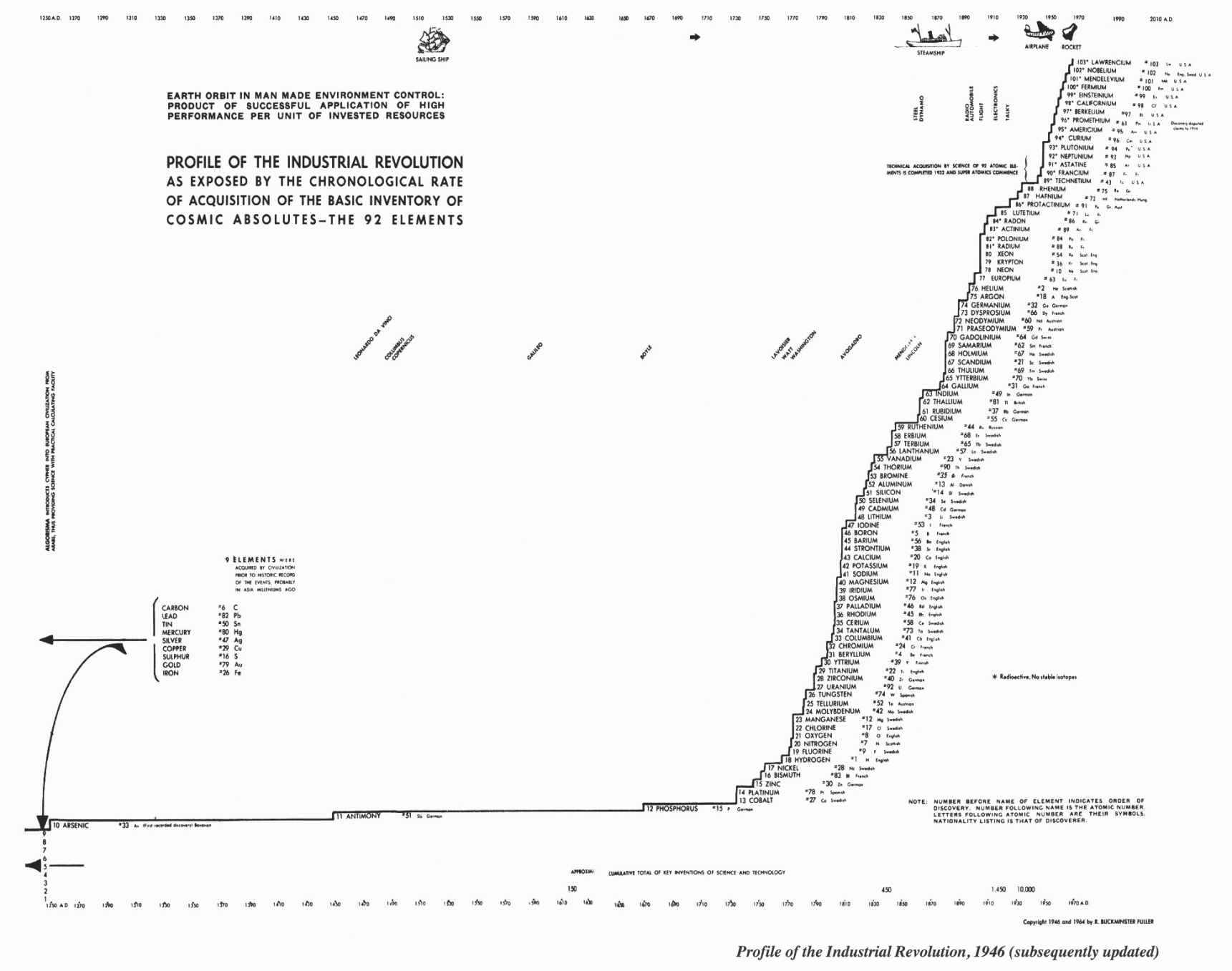
90 It is interesting to note that the post-uranium element isolations, starting with 93, occur with extraordinary regularity. Witness the approximately straight-line ascent of the post-92 isolations as well as the direct correspondence of the elemental numbers with the numbers representing the successive order of isolations. This correspondence is unlike the discovery pattern theretofore occurring. For instance, isolation number 97 is berkelium—element number 97—with 97 electrons and 97 protons.
91 In the first 92 isolations, however, the order of isolation does not correspond to the atomic-number order. The twenty-eighth isolation was zirconium—element number 40; the thirty-first isolation, beryllium, was element number 4; the eighteenth isolation was hydrogen, which was element number 1, meaning one electron and one proton and so forth. None of the atomic numbers correspond to the numbers in order of successive isolation within the ‘‘first family’’ of 92 elements.
92 The extraordinary pattern disclosed by this curve of man’s acquisition of fundamental controls over the basic energy patternings of nature portrays only the evolutionary rate of development of pure science. It is subjective in that it establishes only a potential use-advantage for man. Without discovered use or technical capability to use having been as yet invented by man, this pure knowledge remains only potential.
93 In view of this curve of development of the high fundamental potential, it is appropriate to ask ourselves: What is the most comprehensive change in the relationship of man to his earth and his universe that may be realized physically by the application of this ‘‘pure (physical) knowledge’’?
94 Probably the most significant consequence of the application of this knowledge is man’s alteration thereby of his ecological patterning in universe.
95 Amongst all the species of life on earth, none of them, other than man, has consciously participated in the fundamental alteration of their overall, lifetime ecological sweepout patterning. Eels, plovers, and many other biological species unconsciously were forced to alter their total lifetimes’ cumulative ecological patterning—by the comprehensive earth-surface changes induced by the successive ice ages. As ice receded, cold-area-breeding types of life were forced to ever-larger annual migrations between the most favorable tropical feeding grounds and arctic breeding grounds, respectively. This was unconscious participation in the fundamental alteration of ecological patterns. The designing and building of a hydroelectric dam or development and production of an antibiotic constitute conscious participation by man in the evolutionary pattern transforming of universe.
96 Up to and including my own father’s generation, men were limited essentially to motion accomplished almost exclusively by their own leg motion—mildly increased by horse and vehicular travel. In 1914, American man was averaging 1,640 miles per year total travel. Thirteen hundred miles were accomplished by his (integral) legs, and 340 additional miles were accomplished by his (nonintegral) ‘‘vehicles.’’ This vehicular augmentation was a motion increase of only 25%. As a consequence of mass production of the equipment of mobilization during World War I, in 1919 U.S. man covered 1,600 miles by vehicle alone—in addition to his continued 1,300 miles per year walking—a total of 2,900 miles per man. By 1942 U.S. man was averaging 4,500 miles per year by vehicles plus 1,300 miles per year by legs or an annual total ecological sweepout of 5,800 miles per year. In view of the ‘‘life-expectancy tables’’ we find that the total miles of an average human’s lifetime’s mileage to-and-froing, ecological sweepout, up to and including my father’s lifetime, was only 30,000 miles. However, at 69 I had already covered three million miles, which is one hundredfold the lifetime distance accomplished by humans of any previous generations. I am one of a class of several million human beings, who, in their lifetimes, have each covered three million miles or more. The class of senior airline pilots has covered severalfold my three-million-mile sweepout. Astronauts equal my three-million-mile sweepout every one hundred circuits of the earth, i.e., in approximately every four days of earth orbiting. All these dramatic alterations of the ecological pattern of man have accrued directly to the inventory of Cosmic Absolutes—‘‘canned’’ and put on the ‘‘potential shelf’’ by the pure scientists, working like bees to store the ‘‘honey,’’ utterly unaware of the value to man of that honey or of what man will do with it.
97 To realize ecological pattern transformation requires that man penetrate environments theretofore intolerably hostile to his naked existence. His invention of hats and clothing first permitted man to penetrate hot and cold regions theretofore intolerable. Clothing represented man’s first environment-controlling and ecology-transforming tool. When man built himself a house, making possible his existence during external development of hostile conditions, it did not alter, however, his ecological patterning geographically—any more than did his retreat into a cave. To make fundamental alteration of his ecological sweepout, man must propel his harm-immunizing, controlled environment into geographical realms of previously intolerable environmental conditions. He must propel the environment-controlling device either by his own power or by his control of power systems external to and greater than his bodily power system.
98 In order to maintain a uniform measure of the magnitude of effectiveness of such (previously intolerable) hostile-environment penetrations by man, I have documented man’s circumnavigations of the earth—inside his succession of improved environment-controlling machines, propelled by energy patterns, which, though indirectly controlled by man, are nonetheless external to and greater than his integral, metabolic energy-conversion, propulsion capabilities.
99 As shown by little symbolic pictures along the top area of Figure 1 Change: add ref , the first such circumnavigation of earth by man was accomplished with the
wooden sailing ship, which took approximately three years. About 350 years later
man circumnavigated earth in a steel steamship, taking approximately three weeks.
Seventy-five years later he circumnavigated the earth in an aluminum airplane, taking
approximately three days total flying time. Thirty-five years later he circumnavigated earth in
an exotic-metal-structured rocket capsule, taking a little over an hour for each orbit
cycle.
Change: add ref , the first such circumnavigation of earth by man was accomplished with the
wooden sailing ship, which took approximately three years. About 350 years later
man circumnavigated earth in a steel steamship, taking approximately three weeks.
Seventy-five years later he circumnavigated the earth in an aluminum airplane, taking
approximately three days total flying time. Thirty-five years later he circumnavigated earth in
an exotic-metal-structured rocket capsule, taking a little over an hour for each orbit
cycle.
100 We have in the intervals between the progressive modes of circumnavigation as well as in the contractions of the successive elapsed times for the circumnavigations both a second- and third-power acceleration of the original velocity rate of pure science growth as demonstrated by the prime family of 92 chemical element isolations. To be realistic we must now multiply this third-power acceleration by a fourth coefficient. The fourth coefficient is the conceptual regeneration induced in the human mind by the concomitant visual information, circumnavigation of earth now being accomplished by the team of Telstar satellites whose world-around relayings of the electromagnetic wave-born TV communications will result in a four-dimensional acceleration of man’s teleologic and conscious participation in universal evolution.
101 The extraordinary fourth-power acceleration thus to be realized by man in the distribution of technology generating information, through computers, electronics in general, and the world-around information relay, will integrate the total acceleration, the rate of human ecology transformation to a fifth-power progression. Within ten years anything reasonably ‘‘thinkupable’’ by science fiction will probably have been realized.
102 I know of no device as effective as this chart to generate comprehension of the unprecedented rate of experience acceleration into which man has now entered.
103 Along the bottom of Figure 1 Change: add ref the numbers 150, 450,
1,450, and 10,000 occur in approximation of the cumulative number of key science and
technology inventions realized by all men, everywhere, up to the historical dates at
which those numbers are posted. I have not yet made accurate check of 1964 figures,
but it is in the magnitude of millions. It can only be measured effectively at a later
date.
Change: add ref the numbers 150, 450,
1,450, and 10,000 occur in approximation of the cumulative number of key science and
technology inventions realized by all men, everywhere, up to the historical dates at
which those numbers are posted. I have not yet made accurate check of 1964 figures,
but it is in the magnitude of millions. It can only be measured effectively at a later
date.
106 Just go ten years to the right of the first man orbiting of earth in 1961, and you may safely say that by 1971 anything dreamable can happen. When I stand up here for instance and talk about changing obsolete, ineffective, and debilitating school patterns, the established reflexive conditioning of our brains tends to expect that it would take another hundred years to bring about that change. But the rate at which information is being disseminated, integrated, and inhibited into our current decision-making regarding the subjects I am discussing comprehensively discloses that my discourse constitutes subconsciously the general atmosphere of our thinking. The changes indicated as desirable are going to happen very, very rapidly. And I would say to you as educators, thinking about what you may dare to undertake, ‘‘Don’t hesitate to undertake the most logical solutions. Take the biggest steps right away and you will be just on time!’’
107 Change has become recognized now as normal. Just think. Isaac Newton’s first law of motion was ‘‘A body persists in a state of rest.’’ Then he said, ‘‘or in a line of motion’’ as a secondary thought, ‘‘except as affected by other bodies.’’ Normal was at rest. Change was abnormal. Einstein gave us the opposite concept in which he made the velocity of light the normal speed and the normal pattern of an all-acceleration universe. Any other lesser velocities or apparent motions were abnormal. We are now in an all-Einstein world. As a consequence of the extraordinary acceleration of technology in World War II, brought about by the technological competition to have airplanes outperform each other, we suddenly came to the realization that change was realistically normal. Man is now consciously coordinate with evolution as a continual process of change. Most recently businessmen have been acknowledging change to be normal and most profitable. In the past men felt that (other than fashion) changes would always be too costly and preclude profit making. Yesterday’s businessmen opposed change politically. The 1964 presidential election saw business supporting change for the first time.
108 I was told in school about Galileo’s parallelogram of forces. It was drawn on a plane where you showed one body running at a certain velocity in a given direction. You multiplied its weight times its velocity and that made the length of the line; we called such a force line a vector. Then we had another body which was on collision course with the first moving body, which we had vectored. And you took the second moving body’s weight times its velocity and that was the length of the second line or vector. And the second body also was going in a unique and discreetly identified compass direction. You had these two moving bodies come together and then you made two other lines parallel to the first set of two vectorial lines and they made a parallelogram with the first two vectors.
109 Next you made a long diagonal in that parallelogram from the point of collision to its diagonally opposite corner. Then you extended the long diagonal outwardly from the parallelogram from the point of collision, extending this line to a length equal to the diagonal already constructed inside the parallelogram and that external equidistant extension of the diagonal of the parallelogram was called the resultant of forces. In the Navy I had also been taught Galileo’s parallelogram of forces—at the Naval Academy. For some reason that I don’t know of it was never considered at the U.S. Naval Academy that when two ships ran into each other, Galileo’s force diagram told us that following the collision as indicated by the ‘‘resultant of forces’’ the two ships were supposed to waltz north-northeast for 12 miles together. I saw as indeed most all sane men see that such behavior was just what the ships didn’t display after collision. One of them went in toward the center of the earth and that wasn’t in the diagram. I decided that this criticism was typical of my general suspicion that we were not starting with the right set of axioms or simplest concepts, as for instance when we said that ‘‘plane’’ geometry is more fundamental and therefore easier than solid geometry, and that a dynamic geometry was something prohibitively ‘‘way out’’ in relative difficulty of comprehensibility. ‘‘Geometry didn’t have qualities of energy!’’ said the pure mathematicians. All their complete abstraction of pattern from reality of experiences was thought to be simple. I discovered that nothing can be more complicated than ‘‘plane’’ geometry nor a more highly specialized case of ‘‘pure mathematics.’’ Plane geometry is the most special case of ‘‘not true at all.’’
110 So one of the two ships colliding on the wavy surface of spherical earth goes towards earth’s center. One of them does go a few hundred feet in the direction of Galileo’s resultant of forces but not 12 miles. We find that in reality four forces are operating. Two accelerate conically together, rising from earth, plus gravity, plus the resultant. When the ships first ran into each other, they actually rose outwardly from earth’s center because in acceleration both ships were ‘‘trying’’ to leave the earth. If they could accelerate faster—like rockets—they could leave the earth. So, when two ships collide they usually rise outwardly against gravity, before they subside, and then one or both either go into the bottom of the sea or go a few yards in the direction of the resultant of forces. The pattern of real force lines looks very much like a music stand—three vectorial legs spread out with a fourth vertical vector. And so I began to discover and study what we may call fundamental angular degrees of the vectorial interactions of universal freedoms.
111 Figure 2 Change: add ref I’m going to give you a swift but fundamental
insight in respect to the fundamental vectors and their degrees of universal freedom. I
think that these vectorial and angular degrees of freedom relate mathematically to the
fundamentals of music. These are the fundamental generalizations of structure and
transformation.
Change: add ref I’m going to give you a swift but fundamental
insight in respect to the fundamental vectors and their degrees of universal freedom. I
think that these vectorial and angular degrees of freedom relate mathematically to the
fundamentals of music. These are the fundamental generalizations of structure and
transformation.
112 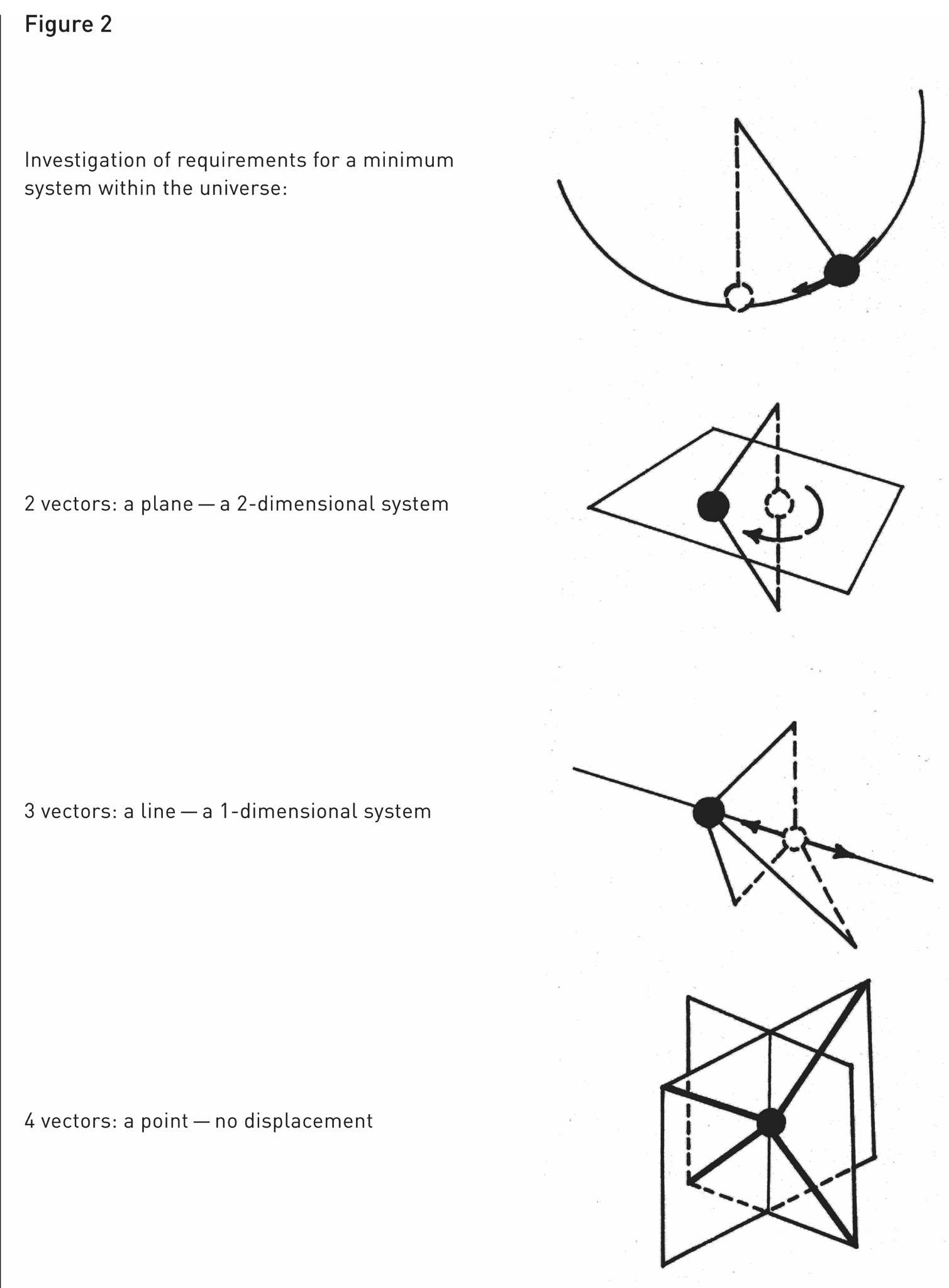 me and the universe
 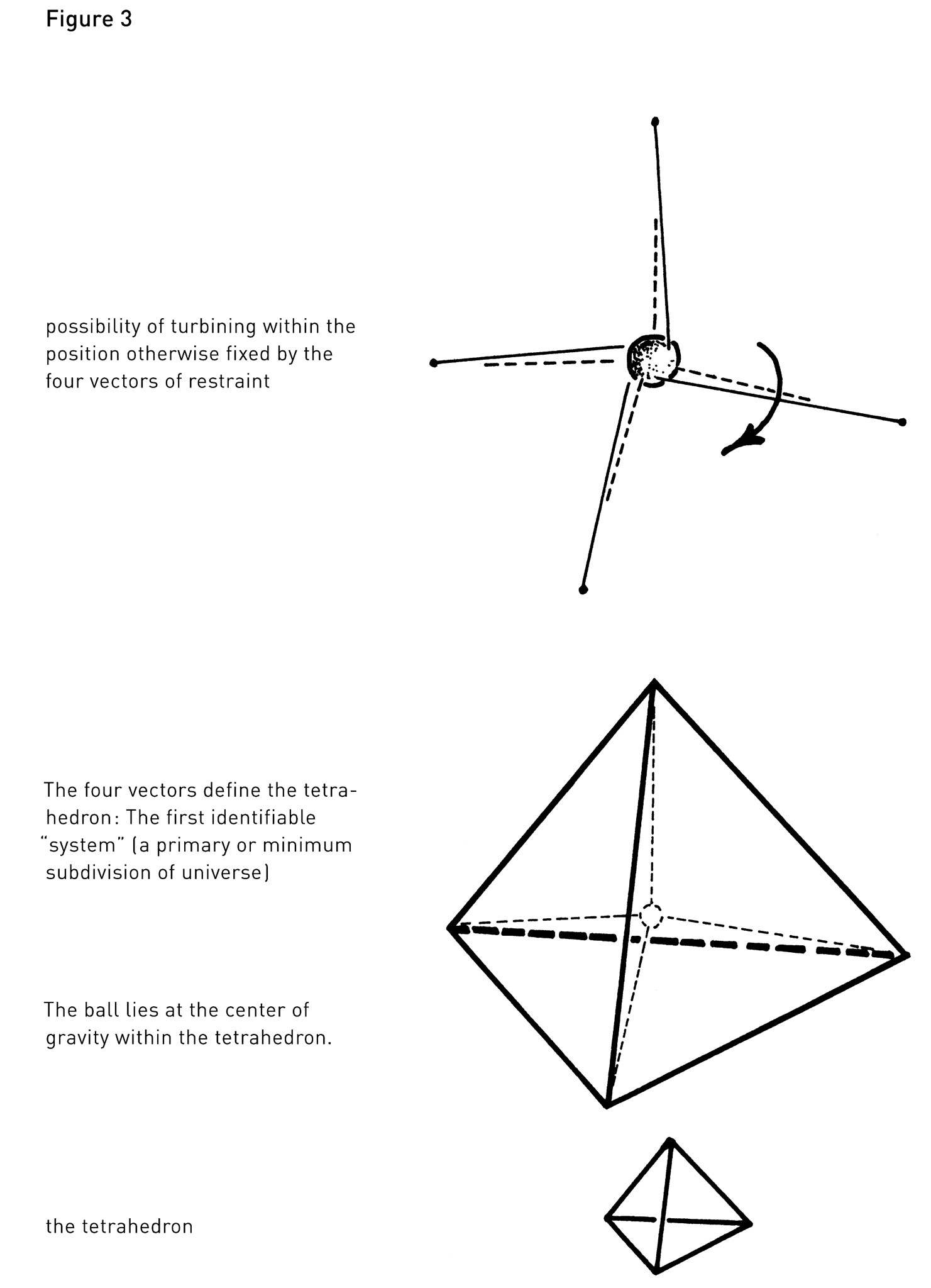 twist
twist 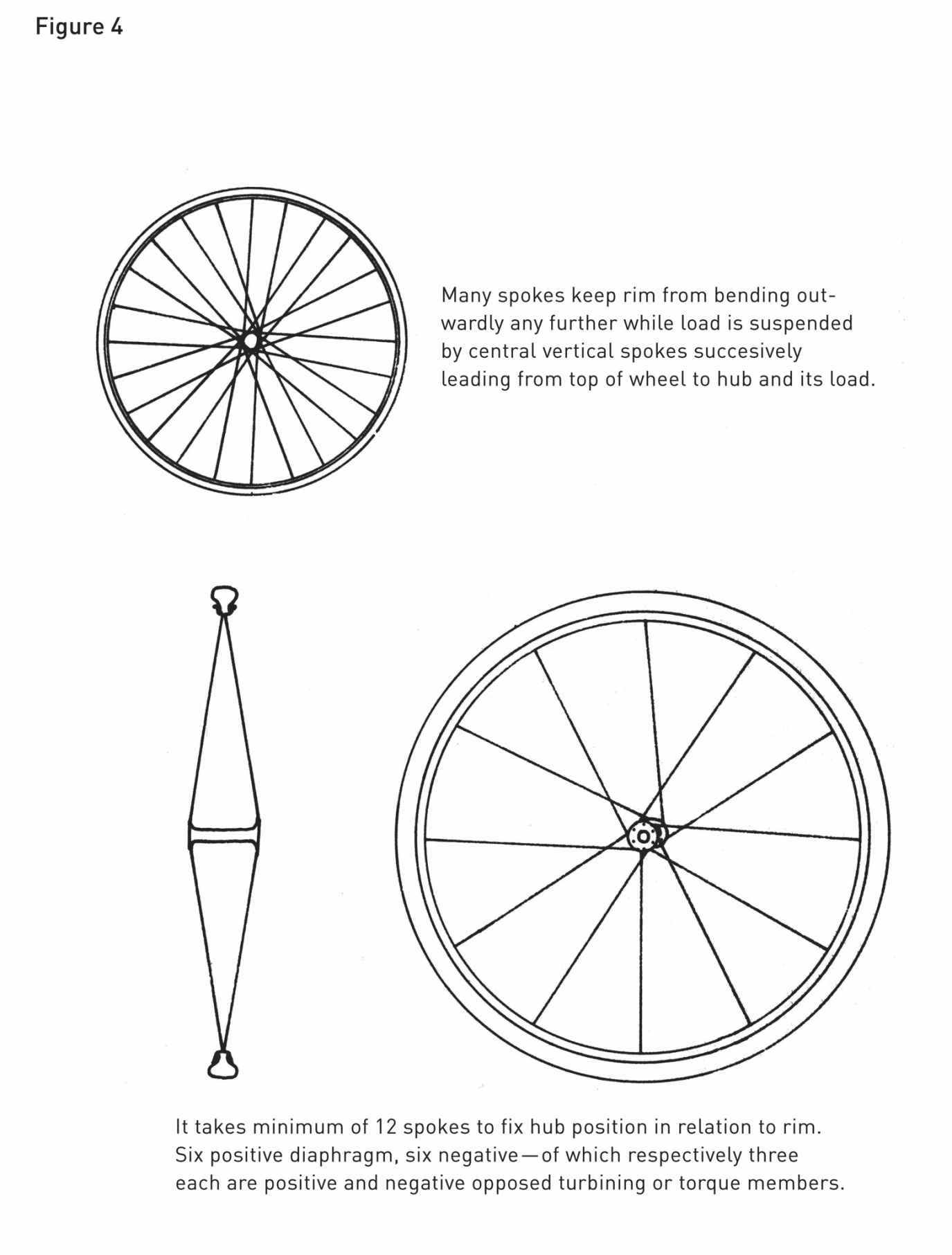 precession. It shows why a gyroscope does
what it does. Children learn a great deal about fundamental motions. Using their
own bodies they learn how to (1) roll, how to (2) spin, how to make a big circle (3)
orbit
precession. It shows why a gyroscope does
what it does. Children learn a great deal about fundamental motions. Using their
own bodies they learn how to (1) roll, how to (2) spin, how to make a big circle (3)
orbit
, while also spinning (so they can have axial rotation—spin—while in orbit) and they learn how to
turn themselves partially (4) inside out by sticking their tongues out. They learn (5) to oscillate,
i.e., how to converge and diverge by inflating and deflating their lungs. But when you say (6)
‘‘precession,’’ that is one motion that they do not understand, because they did all those
other five motions with their own integral bodies forgetting the reaction motion of
the earth when they rolled and orbited, etc ., for the reaction motion of earth is not
visible to them. Precession is the motion effect of a body in motion upon any other
body in motion 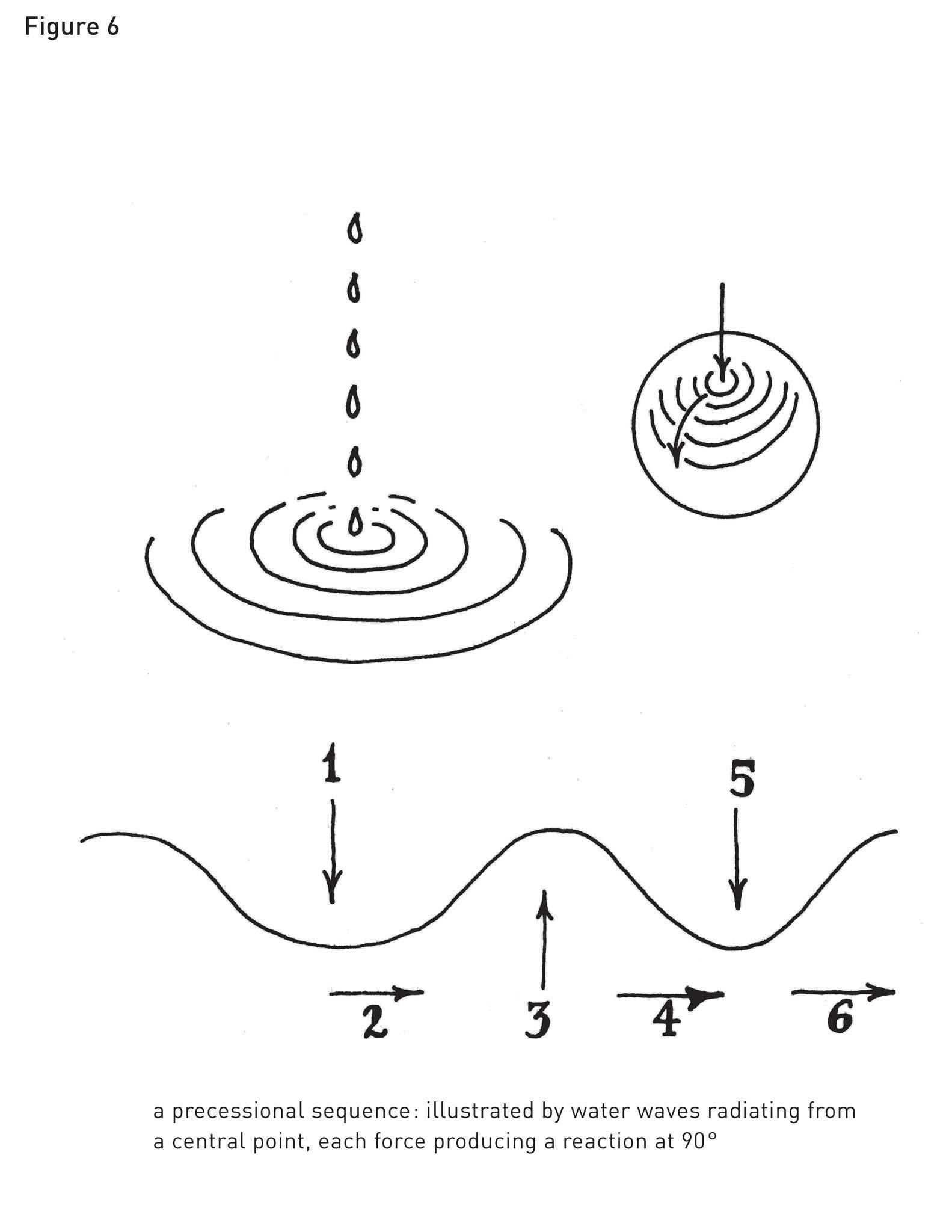 Figure 8 And here is a man jumping from the stern of boat onto
another boat. As a complex of the resultant motions the boats come around and the
bows run into each other. This is typical of the non-180-degreeness of the precessional
effect.
Figure 8 And here is a man jumping from the stern of boat onto
another boat. As a complex of the resultant motions the boats come around and the
bows run into each other. This is typical of the non-180-degreeness of the precessional
effect.
113 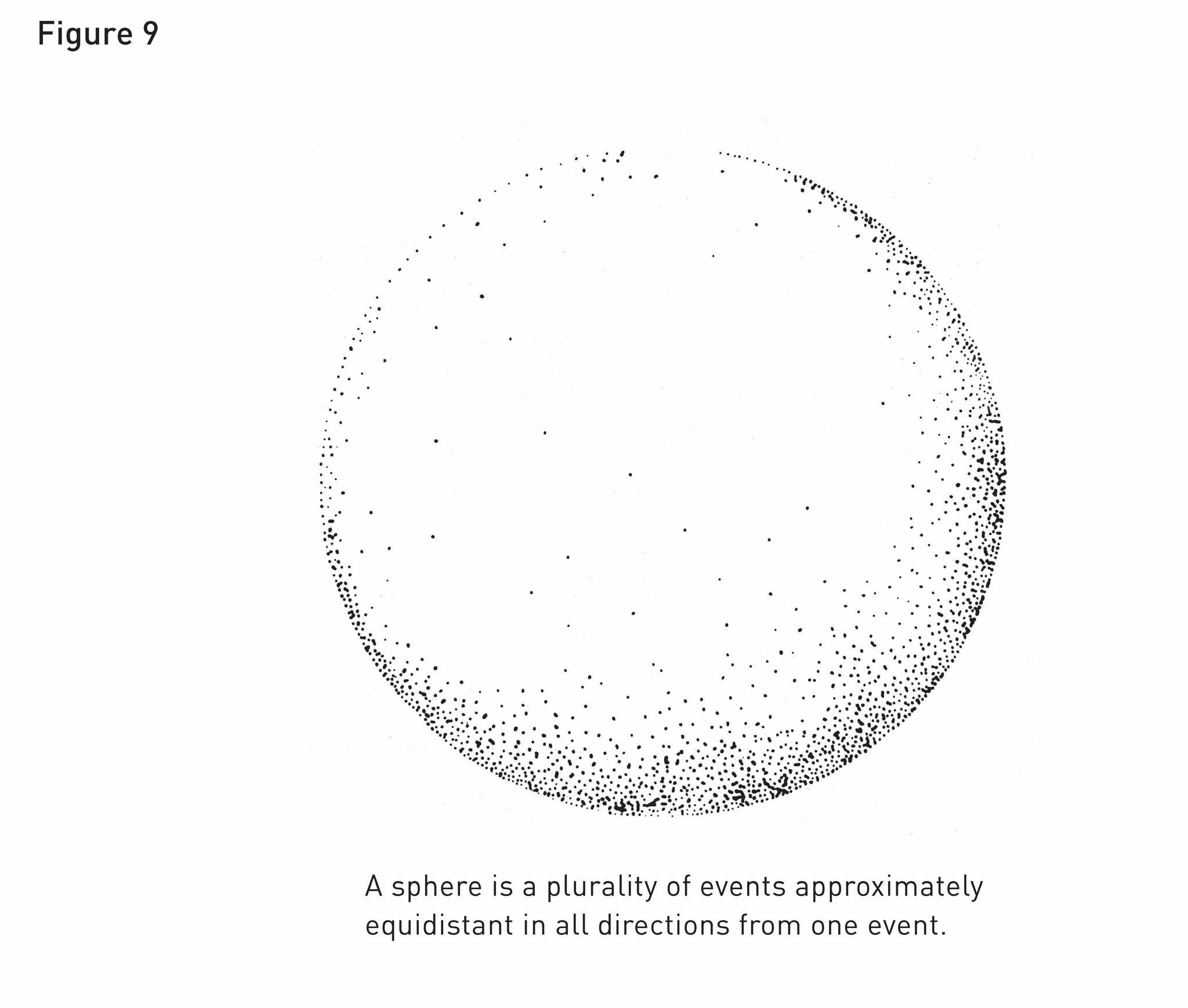 a surface equidistant in all directions from a point. What I am going to show you about
the sphere may be considered by you as typical of the way axioms are found to be both erroneous
and experimentally inadequate. A sphere was defined by the Greeks as surface equidistant in all
directions from a point. It could not have holes in it. Because if it had any holes in it, it
would turn inwardly as you came to the holes and therefore the surface would no
longer be the same distance from the center. So the definition of the Greeks was of
some kind of a continuously and absolutely ‘‘solid,’’ ergo utterly impervious surface
phenomenon that completely surrounded that point. The definition means that the
Greek sphere would then divide the whole universe into all of the universe outside the
sphere and all the rest of the universe inside the sphere and because there are no
holes in it, there could be no traffic of any kind between the two absolutely divided
sections of universe. This scheme is a typical perpetual-motion machine because it
completely defies what physics has found experimentally to be the case. All local systems
(and a sphere is a local system) are continuously losing energy to outside universe.
This is called entropy. It is the famous Second Law of Thermodynamics. All local
systems are full of holes; in fact, as physicists have discovered experimentally by probing
the atom and its nucleus, there are no ‘‘solids.’’ As we probe into the ‘‘solid surface’’
of an experimental sphere we come to the atoms as very remotely deployed sets of
energy ‘‘star’’ events, and we find we’re dealing in a diaphanous Milky Way array of
nebulous ‘‘abstract’’ mathematical events in which half of all the component events have
negative weight wherefore altogether their weights average at zero—and there goes the
last hope of the ‘‘pure’’ mathematician that his nonsolid abstraction ‘‘solid’’ concept
had any meaning whatsoever. The best definition that we can have of a sphere is
a plurality of events aproximately equidistant in approximately all directions from
approximately one event, at approximately the same time. Thus we tentatively restate our
fundamental definitions of experimentally encountered systems and their internal and external
relationships. They are really just childish descriptions stated in terms of our direct
experience.
a surface equidistant in all directions from a point. What I am going to show you about
the sphere may be considered by you as typical of the way axioms are found to be both erroneous
and experimentally inadequate. A sphere was defined by the Greeks as surface equidistant in all
directions from a point. It could not have holes in it. Because if it had any holes in it, it
would turn inwardly as you came to the holes and therefore the surface would no
longer be the same distance from the center. So the definition of the Greeks was of
some kind of a continuously and absolutely ‘‘solid,’’ ergo utterly impervious surface
phenomenon that completely surrounded that point. The definition means that the
Greek sphere would then divide the whole universe into all of the universe outside the
sphere and all the rest of the universe inside the sphere and because there are no
holes in it, there could be no traffic of any kind between the two absolutely divided
sections of universe. This scheme is a typical perpetual-motion machine because it
completely defies what physics has found experimentally to be the case. All local systems
(and a sphere is a local system) are continuously losing energy to outside universe.
This is called entropy. It is the famous Second Law of Thermodynamics. All local
systems are full of holes; in fact, as physicists have discovered experimentally by probing
the atom and its nucleus, there are no ‘‘solids.’’ As we probe into the ‘‘solid surface’’
of an experimental sphere we come to the atoms as very remotely deployed sets of
energy ‘‘star’’ events, and we find we’re dealing in a diaphanous Milky Way array of
nebulous ‘‘abstract’’ mathematical events in which half of all the component events have
negative weight wherefore altogether their weights average at zero—and there goes the
last hope of the ‘‘pure’’ mathematician that his nonsolid abstraction ‘‘solid’’ concept
had any meaning whatsoever. The best definition that we can have of a sphere is
a plurality of events aproximately equidistant in approximately all directions from
approximately one event, at approximately the same time. Thus we tentatively restate our
fundamental definitions of experimentally encountered systems and their internal and external
relationships. They are really just childish descriptions stated in terms of our direct
experience.
114 Another thing that we are always told, which scientists and engineers like yesterday’s
schoolboys as yet accept, is that in both Euclidean and non-Euclidean geometries the pure
mathematicians say that you can run a plurality of lines through any one point. The engineer
puts a point on paper and takes his straight edge and painstakingly draws line after line
(approximately) through (approximately) the same point. And he assumes this to be both
theoretically and realistically done. But try this with your knitting needles or get the smallest
lines you can get. In fact reduce your line to the size of a neutron’s diameter. Let your ‘‘line’’ be
the trajectory in the cloud chamber of a neutron shot into a plurality of atoms and suddenly
there is an interference of the trajectory as the neutron interferes with another nuclear
component’s linear trajectory and the component separates into further subcomponents as all of
the individual atomic components now diverge angularly from one another in identifiable
angular directions unique to each, having failed to permit the neutrons simultaneous
passage through the one point of interference 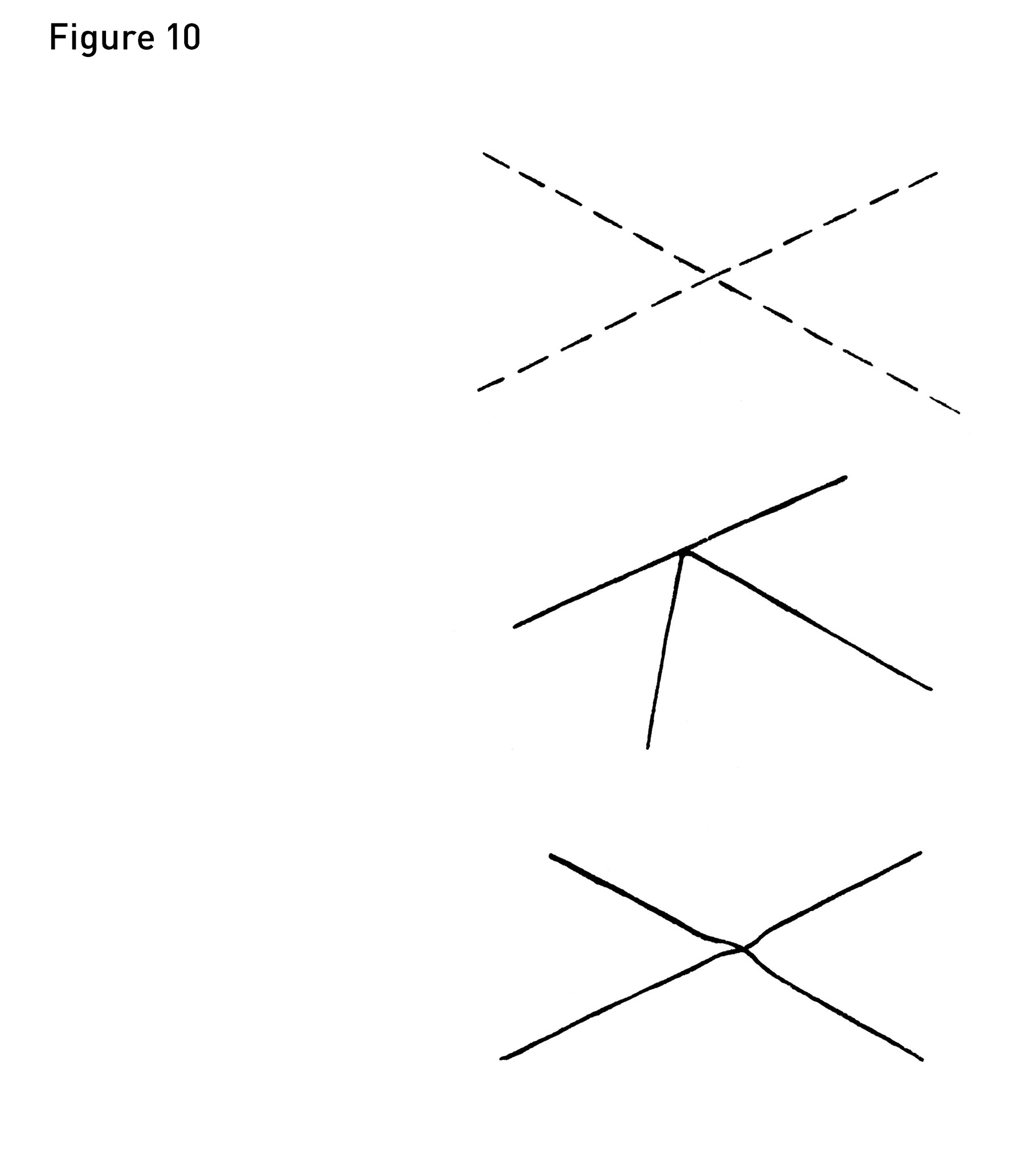 refraction. Those two experimentally
reliable interference
refraction. Those two experimentally
reliable interference 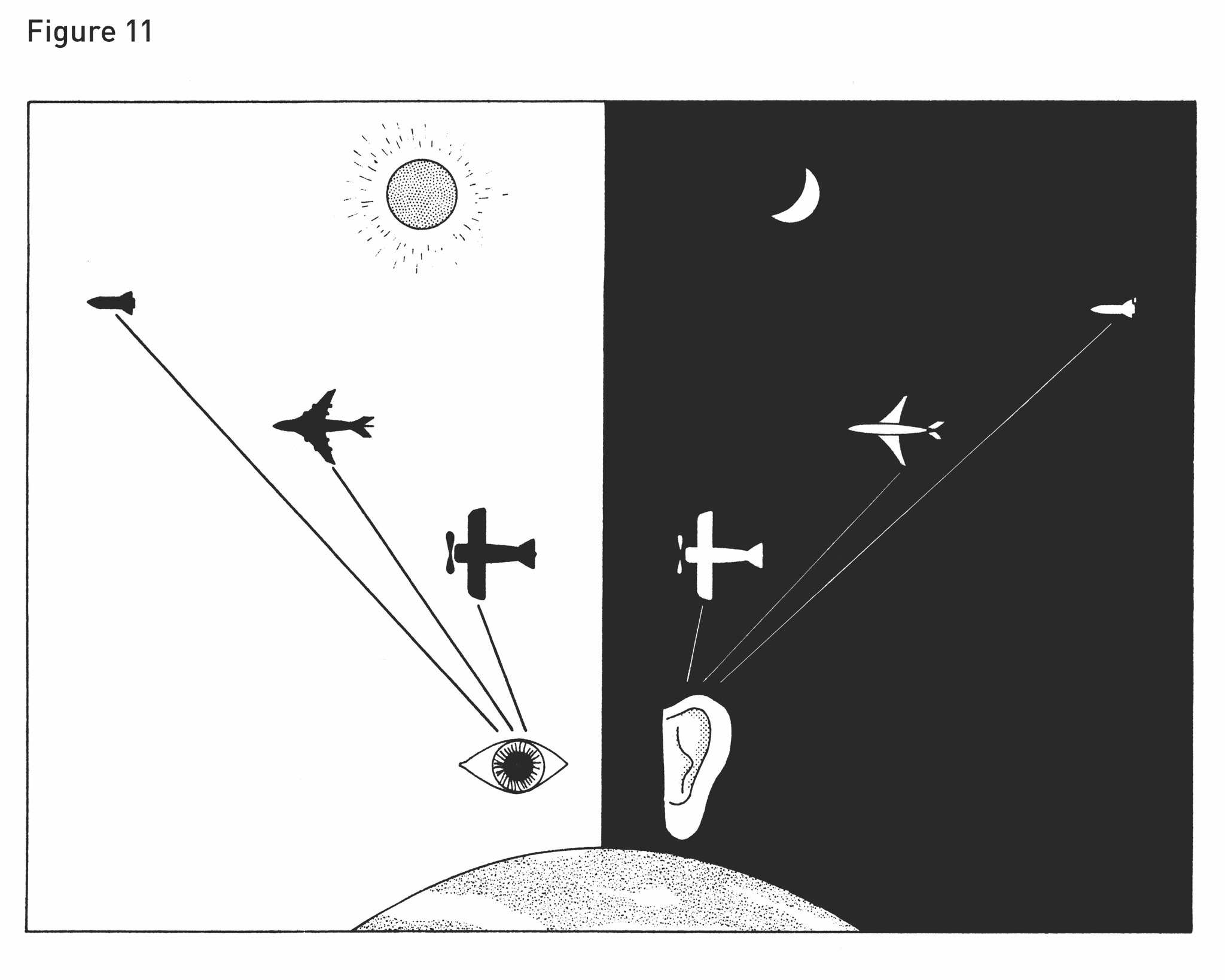 simultaneously and instantly coordinate and operating at
equal velocities. Einstein showed that neither simultaneous nor instant are valid, i.e.,
experimentally demonstratable. In World War I with many airplanes in the sky, we
began to realize that we were hearing them in this direction and seeing them in that
other direction. Then as the planes got bigger and faster and flew higher, we began to
experience enormous distances between where we thought we heard them and where
we thought we saw them. The highest airplanes we can see with our eyes, as little
glintings in the sun, are flying at about 40,000 feet or only about 8 miles out from the
surface of the earth, and 4,008 miles out from the center of the 8,000-mile diameter
of the earth. The 8 miles is a negligible distance, only one-thousandth the earth’s
diameter. The highest orbiting of manned satellites has been at 380 miles outward
of the earth’s surface. This is a distance which is only one-twentieth of the earth’s
diameter—equal to an inch away from a basketball’s surface. Today, man hasn’t as yet gone ‘‘far
out.’’
simultaneously and instantly coordinate and operating at
equal velocities. Einstein showed that neither simultaneous nor instant are valid, i.e.,
experimentally demonstratable. In World War I with many airplanes in the sky, we
began to realize that we were hearing them in this direction and seeing them in that
other direction. Then as the planes got bigger and faster and flew higher, we began to
experience enormous distances between where we thought we heard them and where
we thought we saw them. The highest airplanes we can see with our eyes, as little
glintings in the sun, are flying at about 40,000 feet or only about 8 miles out from the
surface of the earth, and 4,008 miles out from the center of the 8,000-mile diameter
of the earth. The 8 miles is a negligible distance, only one-thousandth the earth’s
diameter. The highest orbiting of manned satellites has been at 380 miles outward
of the earth’s surface. This is a distance which is only one-twentieth of the earth’s
diameter—equal to an inch away from a basketball’s surface. Today, man hasn’t as yet gone ‘‘far
out.’’
115 Our nearest star, the sun, is 92 million miles. And it takes 8 minutes for the light to come from the sun to us. Then the next nearest star is so far away that it takes years for the light to come to us. Our eyes do not tell us the different distances of the stars in the heavens which seem to be in a great spherical bowl array at apparently equal radial distance from us. The stars seem utterly motionless because when objects move at a great distance from us, we cannot see their motions.
116 The stars are all moving at fabulous velocities but the interpositional relationships in respect to our lifetimes seem changeless. We do know but do not sense that we are looking at many stars that haven’t been there for sometimes millions and sometimes billions of years. We do not have any conception of what the true geometrical interrelationships of those stars might be to each other. Their most economical interrelationship patterning might be a surprisingly regular geometrical pattern. The chaotic array is the consequence of differentially delayed information from very great distances.
117 Observe that when we send up four rockets, at one-half second apart, their afterimages are approximately simultaneous. So, we say that we see four rockets ‘‘at the same time.’’ The illusion of simultaneity is one of the most important illusions for us to consider. Musicians may be able to comprehend nonsimultaneity better than do others. Einstein emphasized the importance of attempted spontaneous comprehension of the nonsimultaneity of all the events of universe—a concept akin to our discovery that in our universe none of the lines can ever go simultaneously through the same points. In the realistic concept of the nonsimultaneity of events of universe, we lose forever the conceptual validity of the static pictures which man had assumed in accord with Newton’s norm of ‘‘at rest.’’ People say, ‘‘What is the shape of the universe?’’ and ‘‘What is outside of outside?’’ The question assumes that everything in the universe is actually in simultaneous static array with no consideration of all the myriads of stars that just aren’t there , and haven’t been for billions of years.
118 What Einstein is telling you is that none of the events occur at the same time. There is some illusory overlapping of events from special eclipse viewpoints but we are dealing with a universe of completely nonsimultaneous events. There is no inherently composite picture of ‘‘May Day in Moscow, 1923’’ and the inside of a brand new jukebox in an Atlantic City hotel in New Jersey, Christmas Day, 1965.
119 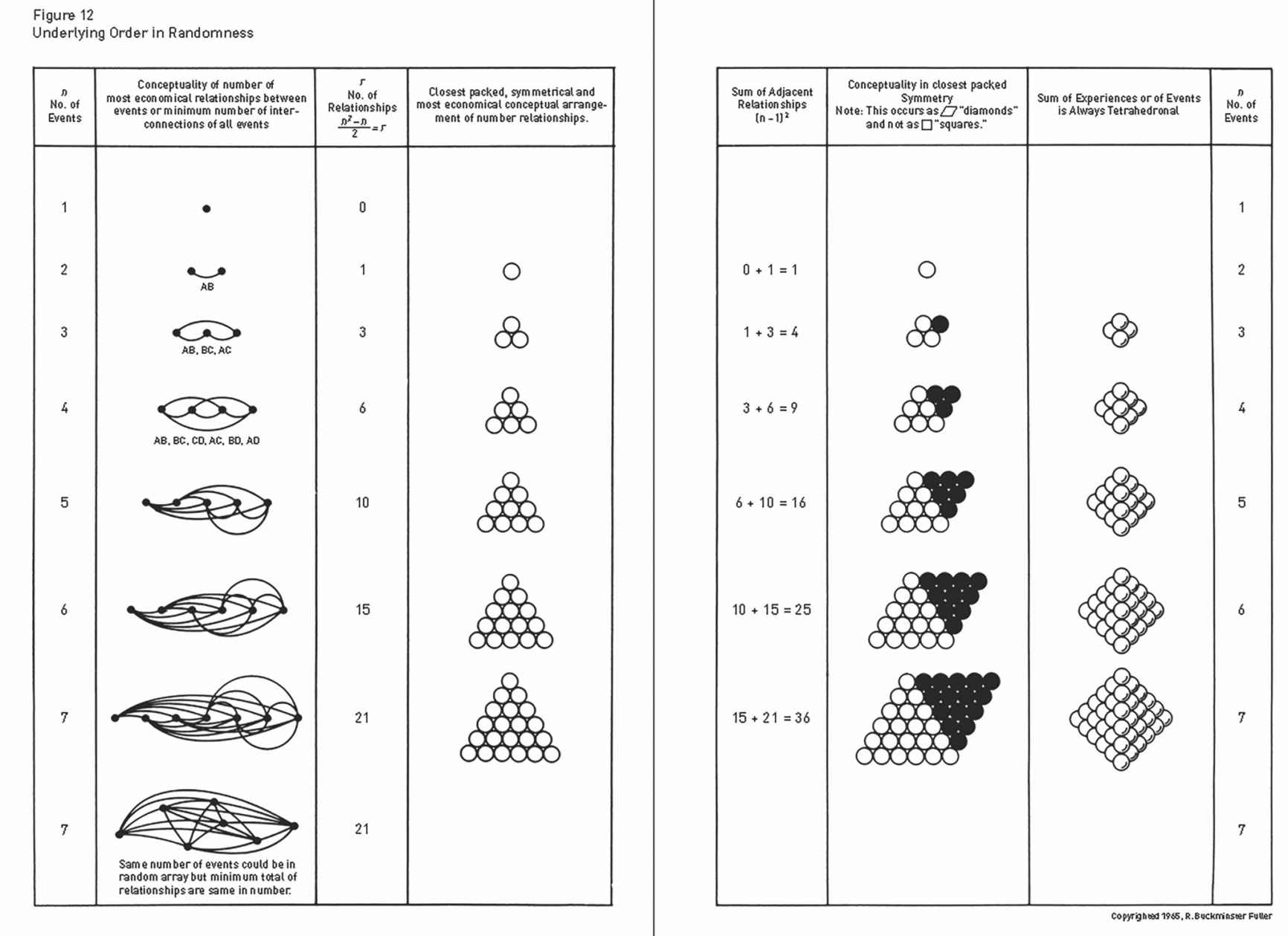 Figure 12 I find this chart to be one of the most exciting I’ve been able to put on paper.
There is a column on the left-hand side where you just see the numbers 1, 2, 3, 4, 5 , 6, 7. In the
second column you see first one black spot. Below it you see two black spots and below them are
three black spots and some little lines connecting them. Now, those lines connecting them
represent the minimum number of telephone wires that we would have to have to
connect each of the points privately with each of the other points in its group. The
black dots of the second column each represent just one experience. In the first row
there is only one experience, which does not need a telephone relationship. But down
below it, there are two experiences and there has to be one telephone wire between the
two for each to be able to communicate privately about his respective experiences.
We could say that for A to telephone B is different than for B to telephone A (A
being the President of the U.S.A. and B? the village barber). We may if we wish
say that each telephone wire is worth two because it has two different alternative
calling orders. For the purpose of simplicity I will hold consistently to the single mutual
value of one as the true minimum number of telephone wires necessary to provide
private hookup between any two telephone callers. These I speak of as experiences.
In the third row of the second column there are three experiences and we find that
there are three private connections. Down below it there are four experiences and we
find that there are six connections. You can express these relationships algebraically.
In the top one, you have A, and A has no relationship. In the next one, you have
AB so you have the relationship AB. So you could say thatBA is the negative; but it
is AB when A is talking with B listening, and it is BA when B is talking and A is
listening—with only one telephone wire necessary to that functioning. A set of negatives
and positives do not require more connections because negative and positive cannot
simultaneously occupy the connecting line. In the third row we have ABC. So you say, AB,
AC, BC. There are three relationships. The fourth line has four experiences ABCD.
And they could be expressed uniquely as AB, AC, AD, BC, BD,CD. So you get six.
Then below that, I have five experiences ABCDE and they have ten relationships,
ten telephone wires. Below that, I have six and they have fifteen telephone wires.
Below that, I have seven and they have twenty-one telephone wires. Therefore the
number of telephone wires are not the same series of numbers as the series of experiences
numbers.
Figure 12 I find this chart to be one of the most exciting I’ve been able to put on paper.
There is a column on the left-hand side where you just see the numbers 1, 2, 3, 4, 5 , 6, 7. In the
second column you see first one black spot. Below it you see two black spots and below them are
three black spots and some little lines connecting them. Now, those lines connecting them
represent the minimum number of telephone wires that we would have to have to
connect each of the points privately with each of the other points in its group. The
black dots of the second column each represent just one experience. In the first row
there is only one experience, which does not need a telephone relationship. But down
below it, there are two experiences and there has to be one telephone wire between the
two for each to be able to communicate privately about his respective experiences.
We could say that for A to telephone B is different than for B to telephone A (A
being the President of the U.S.A. and B? the village barber). We may if we wish
say that each telephone wire is worth two because it has two different alternative
calling orders. For the purpose of simplicity I will hold consistently to the single mutual
value of one as the true minimum number of telephone wires necessary to provide
private hookup between any two telephone callers. These I speak of as experiences.
In the third row of the second column there are three experiences and we find that
there are three private connections. Down below it there are four experiences and we
find that there are six connections. You can express these relationships algebraically.
In the top one, you have A, and A has no relationship. In the next one, you have
AB so you have the relationship AB. So you could say thatBA is the negative; but it
is AB when A is talking with B listening, and it is BA when B is talking and A is
listening—with only one telephone wire necessary to that functioning. A set of negatives
and positives do not require more connections because negative and positive cannot
simultaneously occupy the connecting line. In the third row we have ABC. So you say, AB,
AC, BC. There are three relationships. The fourth line has four experiences ABCD.
And they could be expressed uniquely as AB, AC, AD, BC, BD,CD. So you get six.
Then below that, I have five experiences ABCDE and they have ten relationships,
ten telephone wires. Below that, I have six and they have fifteen telephone wires.
Below that, I have seven and they have twenty-one telephone wires. Therefore the
number of telephone wires are not the same series of numbers as the series of experiences
numbers.
120 We also note that for three experiences there are three telephone wires and for two experiences
one private wire but for our experiences six telephone wires. We can say that in the case of four
or more experiences the number of private-wire relationships is always greater than the number
of experiences. We may also say that the minimum number of private-wire relationships between
any number of experiences is always  = r—where n equals the number of experiences and r
the minimum number of relationships. So the third column of our chart gives the number of
= r—where n equals the number of experiences and r
the minimum number of relationships. So the third column of our chart gives the number of  telephone wires and reads 1, 3, 6, 10, 15, 21, corresponding to 1, 2, 3, 4, 5, 6, 7 in column
one. Then in column four to the right, I have a series of circles in groups of the most
economical and symmetrical arrays possible. The number of circles in these symmetrical
clusters show how many telephone connections were necessary for that row’s number of
experiences. So to come down to the second line reading across, we have two experiences.
And we see that one telephone wire and it says ‘‘1’’ and I have one little black-line
circle in the fourth vertical column. In the row below that we have three experiences
and three relationships. So I have three circles in the fourth vertical column and they
make a little triangle. On the fourth line there are four experiences and they have six
relationships so we count the little circles: 1, 2, 3, 4, 5, 6, also making an equilateral triangle.
We come down to the line below where we have five experiences and they have ten
relationships, and you count the little circles in the triangle: 1, 2, 3, 4, 5, 6, 7 , 8, 9,
10. So in the one below, we have six experiences and fifteen relationships and you
count the circles in the triangle and you will find that there are fifteen. In the row
below where there are seven experiences there are twenty-one relationships. Count the
circles in the symmetrical triangle and you will find that there are just twenty-one.
telephone wires and reads 1, 3, 6, 10, 15, 21, corresponding to 1, 2, 3, 4, 5, 6, 7 in column
one. Then in column four to the right, I have a series of circles in groups of the most
economical and symmetrical arrays possible. The number of circles in these symmetrical
clusters show how many telephone connections were necessary for that row’s number of
experiences. So to come down to the second line reading across, we have two experiences.
And we see that one telephone wire and it says ‘‘1’’ and I have one little black-line
circle in the fourth vertical column. In the row below that we have three experiences
and three relationships. So I have three circles in the fourth vertical column and they
make a little triangle. On the fourth line there are four experiences and they have six
relationships so we count the little circles: 1, 2, 3, 4, 5, 6, also making an equilateral triangle.
We come down to the line below where we have five experiences and they have ten
relationships, and you count the little circles in the triangle: 1, 2, 3, 4, 5, 6, 7 , 8, 9,
10. So in the one below, we have six experiences and fifteen relationships and you
count the circles in the triangle and you will find that there are fifteen. In the row
below where there are seven experiences there are twenty-one relationships. Count the
circles in the symmetrical triangle and you will find that there are just twenty-one.
 = 72,49 − 7 = 42 ÷ 2 = 21. Now it is very interesting that the picture of the relationship is
always a triangle.
= 72,49 − 7 = 42 ÷ 2 = 21. Now it is very interesting that the picture of the relationship is
always a triangle.
121 Then I would point out that those numbers 1, 3, 6, 10, 15, 21, are numbers which, if associated as any pair of adjacents, add to a number of the second power, e.g ., the 1 with 3 makes the number 4 which is 2 to the second power. If you associate the 3 with the 6, you get the number 9 which is the second power of 3. So that you find in combining any two of those sets of relationships adjacently, they make what we call the second power. We used to call it a ‘‘square,’’ but I made a most economical space picture of it and you will find that the circles close pack as diamonds and not as squares. Then in the right-hand column, we have stacks of those triangles of circles which represent the numbers of fundamental relationships. The stacks of triangles are like stacks of cannonballs, and they make a tetrahedron. So we can say then that the sum of the relationships of all our experiences is always tetrahedronal. It is pretty exciting then to discover this extraordinary, onmisymmetrical tetrahedonal sum of all our experience interrelationships. We can say correctly to human beings trying to understand number relationships of arrays (that seem to be chaotic as with the stars in the sky) that all the interrelationships of all stars you are able to count in the sky are always symmetrically triangular. This has to be. Therefore, what seemingly is disorderly on first appearance turns out to have this extraordinary order. And the sums of interrelationships of all the experiences of each of our lives are always tetrahedronal, and all the relationships of all the component events of universe are always tetrahedronal.
122 We’ve heard the popular myth of talking about man and the universe (the Life magazine type of story) which starts universe off as an astronomical aggregate of primordial chaos in some kind of vast nothingness. Somehow or other out of this enormous amount of chaos, in which the scientist finds that random elements are always increasing, ergo becoming ever more chaotic, until the random elements suddenly jell in an inexplicably orderly way and we have all the extraordinary things like daisies, diamonds, and moons. Then it is also said that the scientist wrests order out of chaos. This implies that there were extraordinary scientists standing off somewhere from the primordial ooze to suddenly make the daisies, diamonds, and moons. The legendary scientist is a magician and, therefore, he is a great benefactor of society.
123 Many a great scientist who has made a great discovery, has noted, somewhere in his letters, manuscripts, or diaries and in his recorded talks with his friends just what he had first thought might be going on in certain events of nature which had excited him into making an experiment. According to the great scientists’ own records, their formulations, their hypotheses about what might be going on always turned out to be very crude as compared to what they actually found to be the patterns operative in nature, which always disclosed an extraordinarily sublime, a priori orderliness. In finding that the sum of all of our relationships always add to one neat complete, closest-packed tetrahedron we understand why the scientist had to find orderliness.
124 During the early days of World War II scientists found their narrow fields of specialization beginning to overlap one with the other by virtue of the powerful instruments and the increasing numbers of abutting specialists. The biologist found himself suddenly overlapping the area of the chemist, and the chemist found himself overlapping the area of the physicist. This brought about all the interhyphenating of the sciences such as in bio-chemistry, and so forth. Now the microworld scientists all find themselves so overlapped as to realize that they are in one world, with everywhere the same sublime orderliness. And the orderliness of various aspects of nature are all interrelated, so they realize that they are dealing in just one great, sublimely coordinated, comprehensive accounting system employed by nature. Nature is not only orderly but the orderliness is rationally accountable in pure principle. And pure principles have no beginnings or endings. Therefore, we are not dealing in universe that has to be pictured or explained by a beginning and an ending. The experiences may be a chaotic array. But the interconnections are orderly. What we mean by understanding is: apprehending and comprehending all the interrelationships of experiences. Understanding is symmetrically tetrahedronal.
125 This is as far as I will go in the pictures. I hope that I have introduced some generalized principles which have some relationship to music: for instance, the wave phenomena, the precessional phenomena, and so forth; the omnidirectionality with which we are really dealing. I am quite confident, because I have been exploring it for a long time, that nature has just one coordinate system.
126 In 1917, I found myself asserting that I didn’t think that nature had a department of chemistry, a department of mathematics, a department of physics, and a department of biology and had to have meetings of department heads in order to decide what to do when you drop your stone in the water. Universe, i.e., nature, obviously knows just what to do, and everything seemed beautifully coordinate. The lily pads did just what they should do, the fish did just what they should do. Everything went sublimely, smoothly. So I thought that nature probably had one coordinate system and probably one most economical, arithmetical, and geometrical system with which to interaccount all transactions and transformations. And I thought also that it was preposterous when I was told that real models were not employed in advance science, because science was able to deal with nature by use of completely unmodelable mathematical abstractions. I could not credit that universe suddenly went abstract at some microlevel of investigation, wherefore in order to be able to deal with the physical universe in the most advanced stages of frontiering you had to deal entirely with abstract-formula, unmodelable mathematics. As we acquired larger microscopes and larger telescopes, I found that models always showed up. And men, satisfied with their abstract preoccupations, didn’t bother or didn’t seem to know how to explain the emerging pictures of the obviously systematic but strange, often asymmetrical but sometimes symmetrical models. I thought then that if we could find nature’s own coordinate system we would understand the models and we would be able to develop much higher exploratory and application capability. In chemistry atoms were associating and disassociating in beautiful whole simple- numbers arrangements: such as H2O, or whatever the combination. Chemistry seemed to avoid irrational fractions. Everything was accountable in simple and whole numbers. I felt that if we ever found nature’s coordinate system, it would be very simple and always rational.
127 I am confident now that I have found that coordinate system because I have submitted it to bodies of competent scientists. In October, 1965, I met with competent scientists of all the related fields of physics. I made comprehensive disclosure of the ramifications of the coordinate system which I have discovered and explored for a third of a century. They accepted the coordinated system which I disclosed as probably being nature’s most efficient means of accounting those of nature’s generalized relationships which I tended to identify by the coordination system.
128 The omnirational coordinate system which I have named ‘‘synergetics’’ is not an invention. It is purely discovery. I am quite confident that with the complete and simple modelability of synergetics that it is going to be possible for children at home with closed-circuit TV documentaries coming to them and making their own models, to do valid nuclear-physics formulations at kindergarten age. With that fundamental structuring experience, and sensing through models, children will be making experiments that discover why water does what it does. They will really come to understand what a triangle is and what it can do and does. The obsoleting educational system taught people to think in ‘‘squares,’’ and to measure in terms of ‘‘inches,’’ ‘‘squares,’’ and ‘‘cubes.’’ We’ve come to assume that a cubical or rectilinear house has structural integrity. If you make a cube with little sticks and rubber joints, you’ll find that cubes always collapse. They have no structural integrity whatsoever. We find ourselves starting out on all the wrong axiomatic bases. When we use tetrahedra to account nature we are three times more efficient (with energy) than when we account in cubes. And nature is always most efficient.
129 In this total interprecessional set of events that I have talked to you about, I have stressed that where men think of themselves as most scientifically advanced, especially in pure mathematics, that I find them dealing in axioms that no longer hold true. What they are doing does hold true in relation to that axiom. But inasmuch as they didn’t start with axioms disclosed experimentally by nature they are dealing in nonuniverse, and are playing perfectly good games and I love them for doing it, but they are playing games that are completely irrelevant to what we and nature are doing and need to do.
130 I am confident that in the world of music and in the world of art, human beings have attained much spontaneous and realistic coordination. Artists are really much nearer to the truth than have been many of the scientists.
131 I wasn’t surprised when under the authority and funding of the National Defense Education Act, the Science Advisor to the President recently persuaded the White House to spend some of the science-aimed educational funds on an exploration with art educators in New York. They had their meeting in New York University and brought together some of the best (in my estimation) art educators in the country as well as some good artists. It was realized in our nation’s seeking for scientists that they were only getting people who were good methodologists, who could expand or refine what was already proven, but they had no ability to conceive of as yet entirely hidden and previously unthought-of conditions and relations of nature or to explore and use their minds imaginatively. That is where the word ‘‘creative’’ came in. It was hoped by the scientists and the President that by going to the art educators they might be able to discover in the knowledge and experience of art educators just how children suddenly conceive in sublimely pure and simple yet original patterns. The scientists and the President wanted to know what really constitutes and motivates and detonates the imagination of bright creative children, as well as of the inspiringly resourceful teachers who have the imagination, power, strength, and conviction to go along with the children’s original conceptioning. It is interesting to discover that our national defense, having found the academic world of science per se to be only a methodological system of researching and rehashing already proven phenomena, now discovers that academic science is running into a dead end. Because our scientists are unable to maintain or exceed the world pace of evolutionary development, our whole nation is losing its leadership pace. We have suddenly to turn to the artist. Art educators themselves had found that there was an extraordinary relationship between the conceptually brilliant child and the human-being teacher who the child found was not frustrating it but was accepting and fostering the child’s curiosity and need to deal with its interference-born original questions.
132 In your musical-education world and in your professional meetings, I think it important that you realize that within the next ten years the world of science and the world of seemingly very pragmatic affairs may be turning to the world of music for leadership in fostering the spontaneous development of the most powerfully coordinate capabilities of evoluting life. Rather than being a pleasant sideshow for the more serious central affairs of economic life, you who deal with the music of the universe and the innate coordinate capability of man to tune in the music of the new life may be recognized as dealing with the sensitive mainspring of life itself, because of which you may find yourselves called by society to perform its most responsible task allowing life to succeed.